
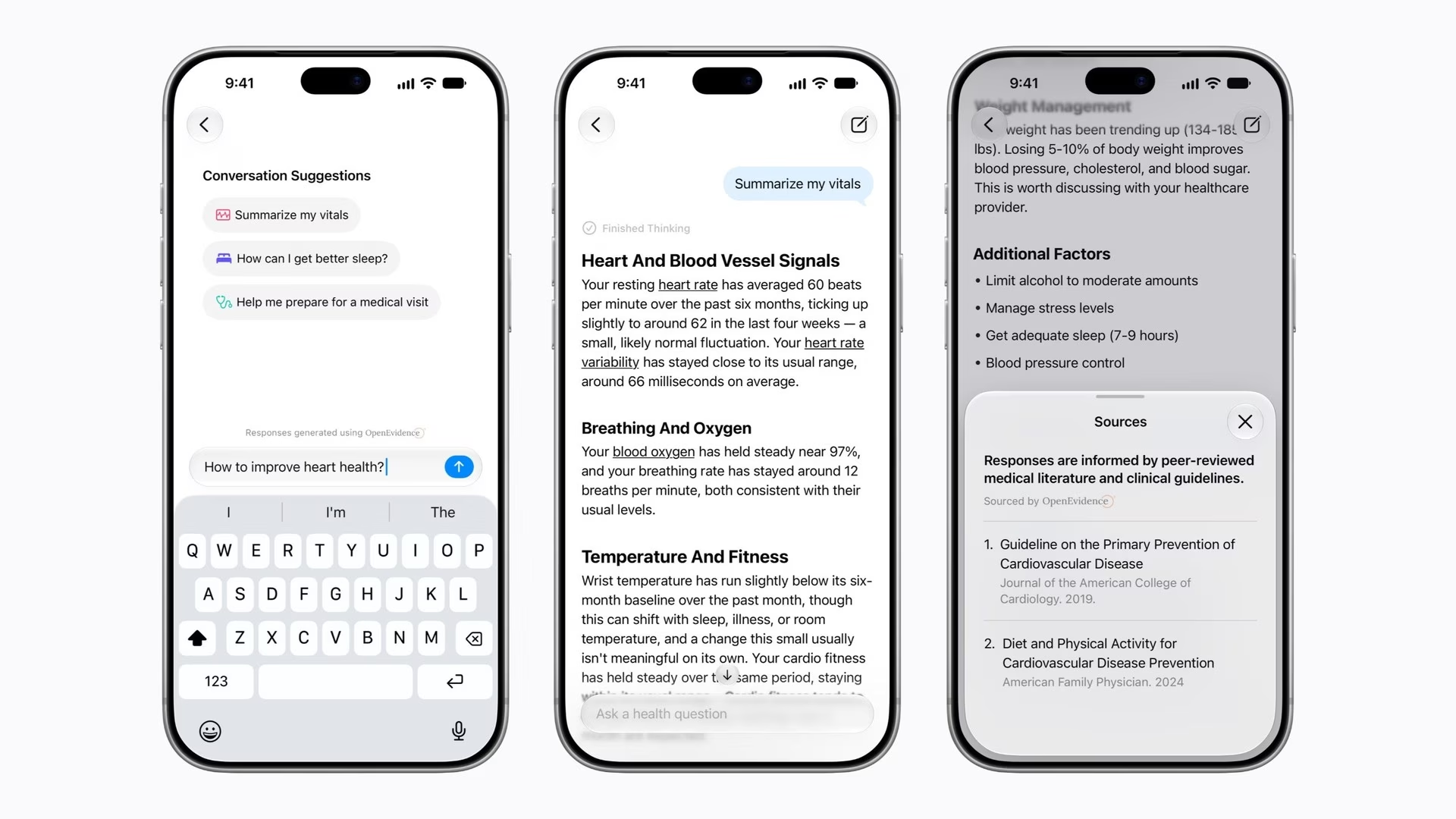
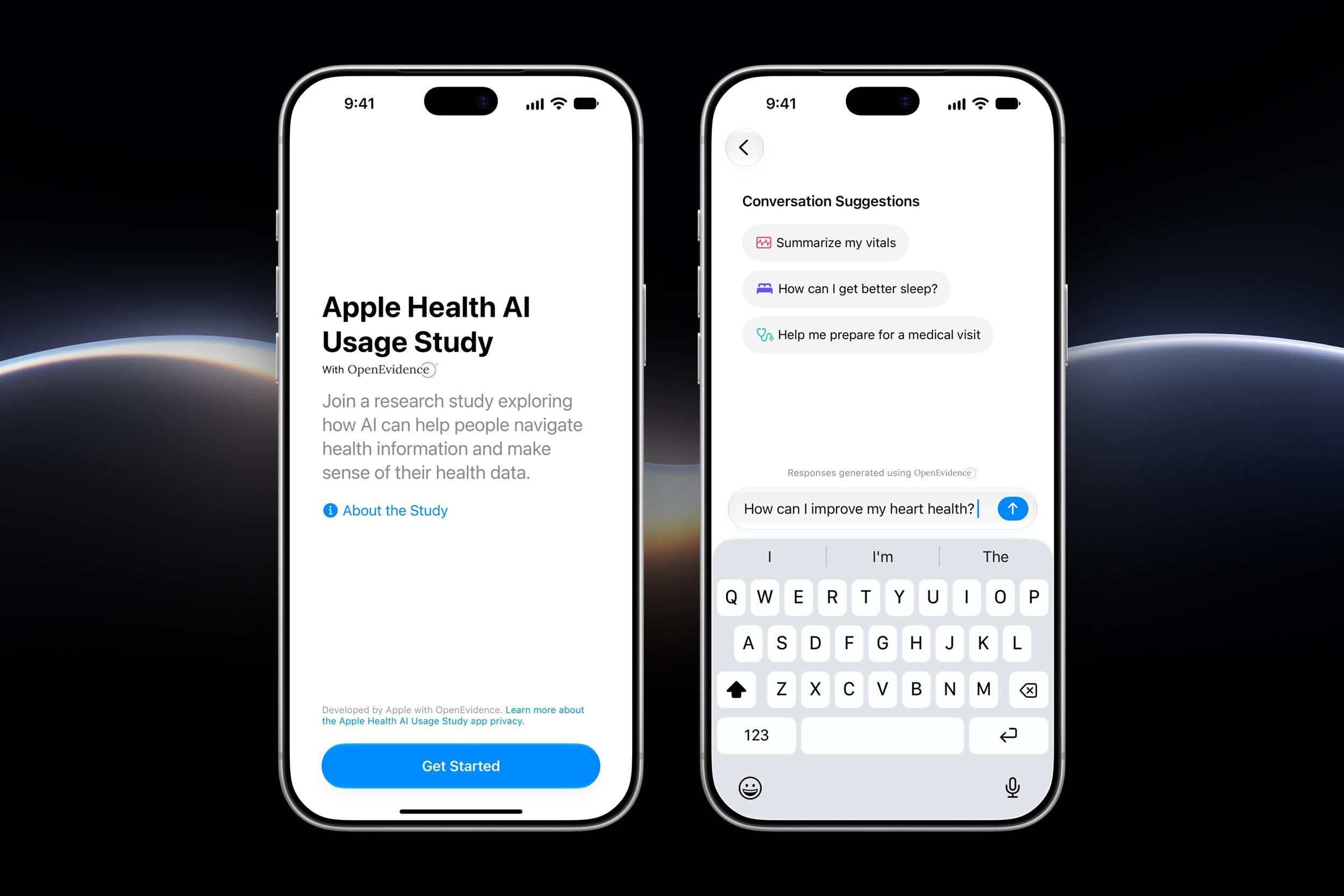
The Apple Health AI Study App Credit: Apple Apple has launched a research study and an iPhone app to learn how people use AI for health questions. The company announced the Apple Health AI Usage Study on Sunday. It runs in the US with OpenEvidence, a clinical AI platform that healthcare professionals use. The study will look at what makes people trust health AI and how good its answers are, Apple said.
It will also measure how well people understand the answers and what they do next. Apple wants the findings to shape how it and the wider industry design health AI tools. “At Apple, we believe responsible innovation starts with scientific rigor and clinical grounding. Health is deeply personal, and conducting a dedicated research study is the most thoughtful way to understand how people engage with, comprehend, and evaluate health AI in everyday life,” said Sumbul Desai, Apple’s vice president of Health and Fitness. How the app works Participants ask the study app everyday health questions.
The answers use plain language and come with linked, peer-reviewed clinical citations. OpenEvidence draws on sources such as The New England Journal of Medicine, the Journal of the American Medical Association and Nature. Participants can also choose to share HealthKit data, such as resting heart rate, activity, sleep or lab results. Apple wants to see whether that personal data makes the answers more relevant and easier to understand.
The study will also test whether the app helps people prepare for visits with their own doctors. The App Store lists it as the Apple Health AI Study App. Its listing adds two more uses: putting personal health data in context, and building a personalised exercise or meal plan. Consumer health tools built on large language models can give incomplete or unclear answers, Apple said.
That is why it wants research on how to present health information more clearly. Privacy and guardrails Apple said it will not use study data to train AI models. Participants decide whether to share any HealthKit data or survey answers. The app has guardrails meant to detect certain concerning questions and suggest that the participant follows up with a provider.
Apple has not integrated the app with Siri or Apple Intelligence, Steve Dent reported for Engadget. Its App Store listing says that neither the app nor the study provides medical advice, diagnosis or treatment. “Patients and clinicians are both turning to AI, but the tools they use are being built and tested in separate worlds,” said Robert Wachter, who chairs UCSF’s Department of Medicine, in Apple’s announcement. Who can join The study is open to up to 200,000 people aged 21 or older in the US. They need an iPhone 15 Pro or later running iOS 26 or later, the models that support Apple Intelligence.
OpenEvidence teamed up with Anthropic in September to offer free medical AI to doctors. OpenAI launched ChatGPT Health in January, and Microsoft and Perplexity followed in March with Copilot Health and Perplexity Health. Get the TNW newsletter ✕ Close Get the TNW newsletter Get the most important tech news in your inbox each week.













Leave a Reply