
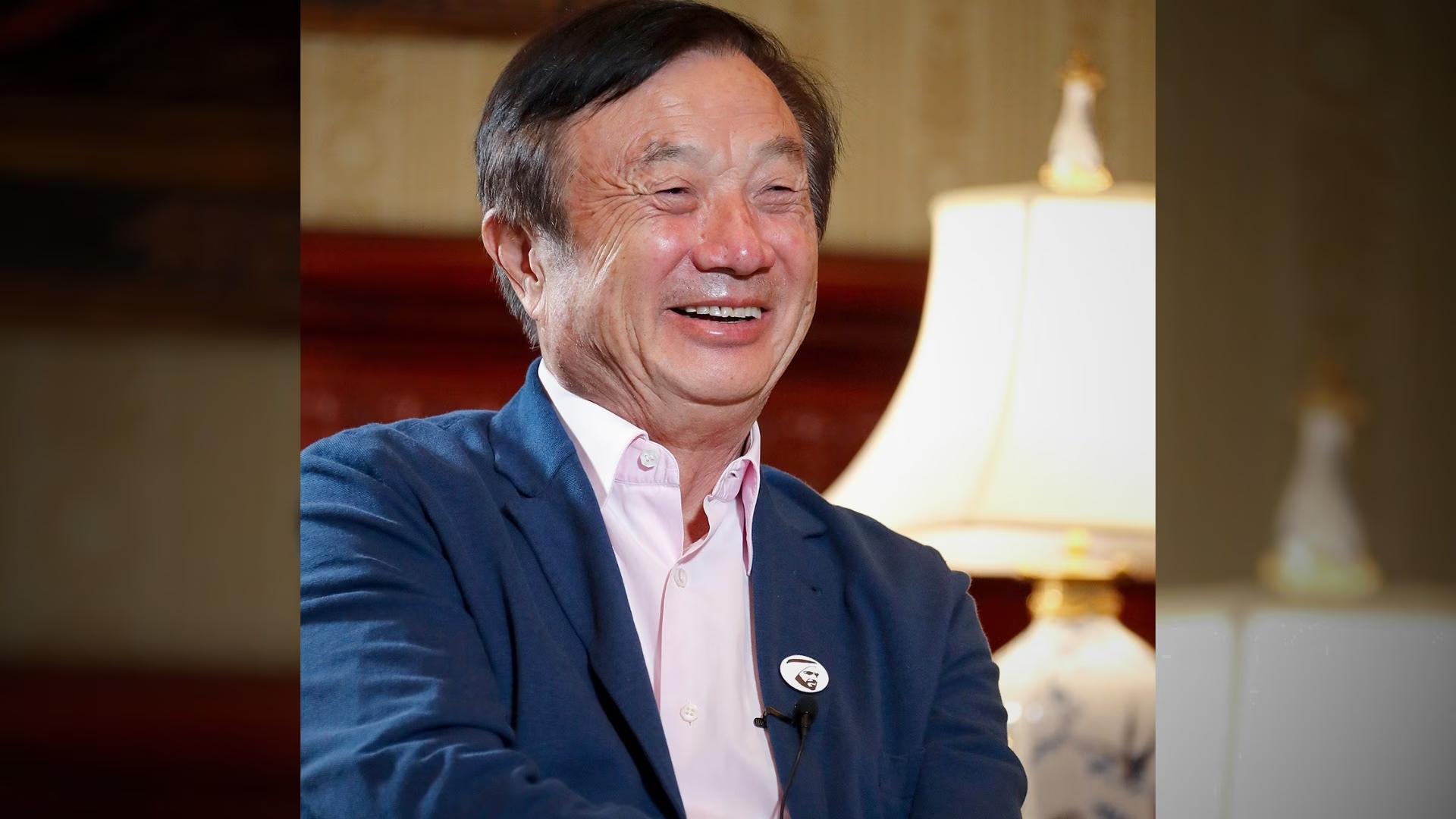
Huawei founder Ren Zhengfei Credit: Huawei US sanctions pushed Huawei and China into self-reliance, and Huawei’s founder, Ren Zhengfei, wants Donald Trump thanked for it. Ren spoke to Keith Bradsher and Adam Satariano of The New York Times at Huawei’s Shenzhen headquarters in October. The paper published the interview on Thursday. “Pass on our thanks to him, and also share the story of the Trump Corridor as well,” Ren told the Times. Huawei executives call a gilded hallway at the headquarters the Trump Corridor.
It is named after the president whose first-term campaign tried to cut Huawei off from advanced chips and global telecoms networks. After the crackdown, Ren said, Huawei became “a company of our own country”. He is 82 and still Huawei’s chief executive. A conviction and new chip curbs The interview ran two days after a federal jury in New York convicted Huawei.
The jury found it guilty of conspiring to steal trade secrets from US companies and of bank fraud linked to Iran. Huawei said the verdicts were “without legal or factual merit”. It also came as the US tightened its curbs on Nvidia’s chips. On 16 November the US moved to restrict remote access to American AI chips through overseas data centres.
Huawei’s Ascend processors have become China’s leading alternative to Nvidia’s chips, the Times reported. Huawei now spends more than $27bn a year on research and development, according to the Times. It has worked with Chinese AI companies, including DeepSeek, to adapt their models to its chips. It argues it can rival Nvidia by linking many processors into one large system, even if each chip is weaker.
Still far behind Nvidia The gap remains wide. Huawei will make less than 4% as much AI computing power as Nvidia this year, research firm Epoch AI estimates. Its most powerful chip, the Ascend 950, delivers about half the performance of Nvidia’s H100, which began shipping in 2022. China also still lacks the most advanced chipmaking equipment, including lithography machines from the Dutch company ASML.
Huawei has been working to fill other gaps at home, including its own AI memory. Many in Trump’s first administration believed the restrictions could destroy Huawei, the Times reported. “We thought this could be a death blow,” Liza Tobin, then a China policy official at the National Security Council, told the Times. Ren, speaking before Nvidia’s recent leadership turmoil, said China would eventually overtake the US in chips. “It’s just a matter of time,” he said. He said he still hoped the two countries could repair their relationship. “We have now established a complete chain that allows us to survive,” Ren told the Times.
Get more TNW on Google Add as a preferred source Read more TNW news @thenextweb Get the TNW newsletter ✕ Close Get the TNW newsletter Get the most important tech news in your inbox each week.









Leave a Reply