
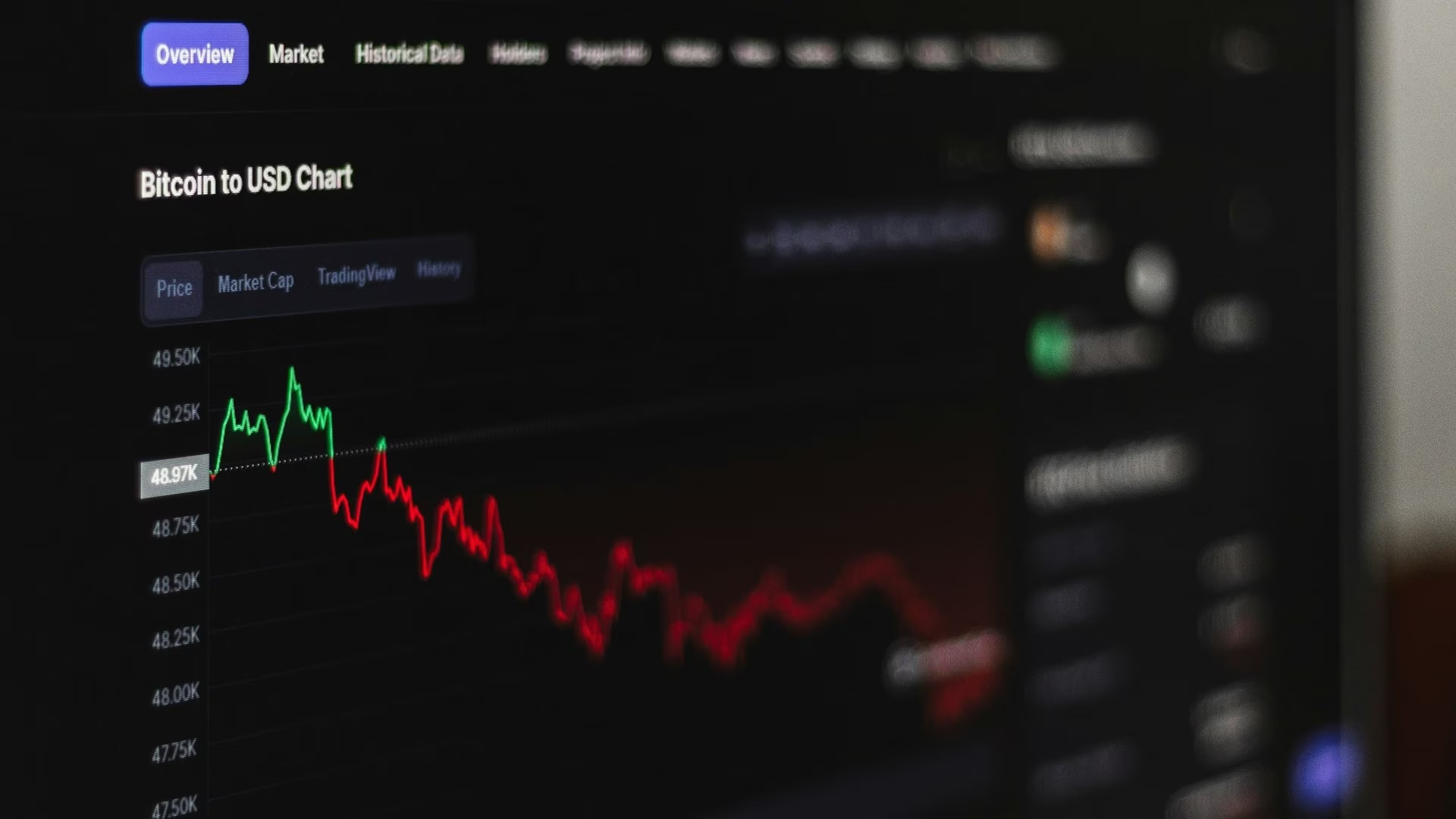
Market swings can push up network fees at the moment loans need liquidating. Credit: Behnam Norouzi on Unsplash A new lending protocol is testing whether predictable blockchain transaction costs can eliminate one of the risks associated with volatile network fees. Decentralized lending protocols rely on automated liquidations to protect lenders when borrowers’ collateral falls below required thresholds. But on blockchains where transaction fees fluctuate with network demand, the cost of executing those liquidations can become unpredictable, particularly during periods of market volatility.
A new protocol called LOVEH, deployed on the AEREDIUM Layer 1 testnet, is testing a different approach: keeping transaction costs fixed so that borrowers are never liquidated simply because gas fees have become too expensive. The distinction matters because blockchain transaction costs and collateral risk are two separate variables. While borrowers should remain exposed to changes in the value of their collateral, the protocol is designed to prevent rising network fees from becoming an additional cause of liquidation. Separating Network Costs From Collateral Risk On Ethereum and other networks with variable transaction fees, gas prices can increase sharply during periods of congestion.
This makes the cost of interacting with lending protocols less predictable, potentially affecting collateral management and the economics of liquidation. LOVEH operates on AEREDIUM, which publishes a fixed gas rate of $60 per megabyte of transaction data. Unlike demand-based fee models, this rate is designed to remain unchanged during periods of increased network activity. The idea is to remove transaction fee volatility from the lending equation.
Borrowers can still be liquidated if their collateral falls below the required threshold. However, the protocol aims to ensure that a loan is never liquidated solely because network transaction costs have increased. The Trade-Off of Immutable Smart Contracts LOVEH also takes a strict approach to smart contract immutability. Its contracts have no owner, administrative keys, governance controls, or upgrade mechanisms.
Once deployed, even the original developers cannot pause the protocol or modify its rules. This architecture removes the possibility of administrative intervention, but it also creates a security challenge. If a vulnerability exists in the deployed code, developers cannot simply upgrade the contracts to correct it. To examine those risks before introducing real funds, the AEREDIUM Foundation has opened the protocol to public security testing.
Researchers can inspect the open-source contracts, deploy lending markets through the protocol’s factory contract, and attempt to identify vulnerabilities on the public testnet. The foundation is offering 10,000 AERX in airdrop points for each confirmed qualifying vulnerability, including flaws involving unauthorized fund transfers, accounting inconsistencies, locked assets, or incorrect liquidations. Testing the Infrastructure Behind Autonomous Lending The protocol’s interest rate model is calibrated using data from the three largest USDC lending pools on Ethereum. Its initial parameters were derived from their smart contracts and checked against two independent sources.
Underlying LOVEH is AEREDIUM’s proof-of-attestation consensus architecture, which combines machine-based validation with human verification rather than traditional proof-of-work or proof-of-stake mechanisms. The broader technical question is whether predictable transaction pricing, combined with immutable smart contracts, can make decentralized financial applications more reliable without introducing additional administrative dependencies. Fixed gas fees alone do not eliminate the risks of collateralized lending, nor do they guarantee that liquidations will always execute successfully. Network congestion, transaction inclusion, and smart contract security remain relevant considerations.
For now, LOVEH provides a public test environment for examining whether removing gas price volatility can make automated lending more predictable. Contributed article. Not produced by the TNW newsroom and does not reflect the editorial stance of TNW. Get the TNW newsletter ✕ Close Get the TNW newsletter Get the most important tech news in your inbox each week.












Leave a Reply