
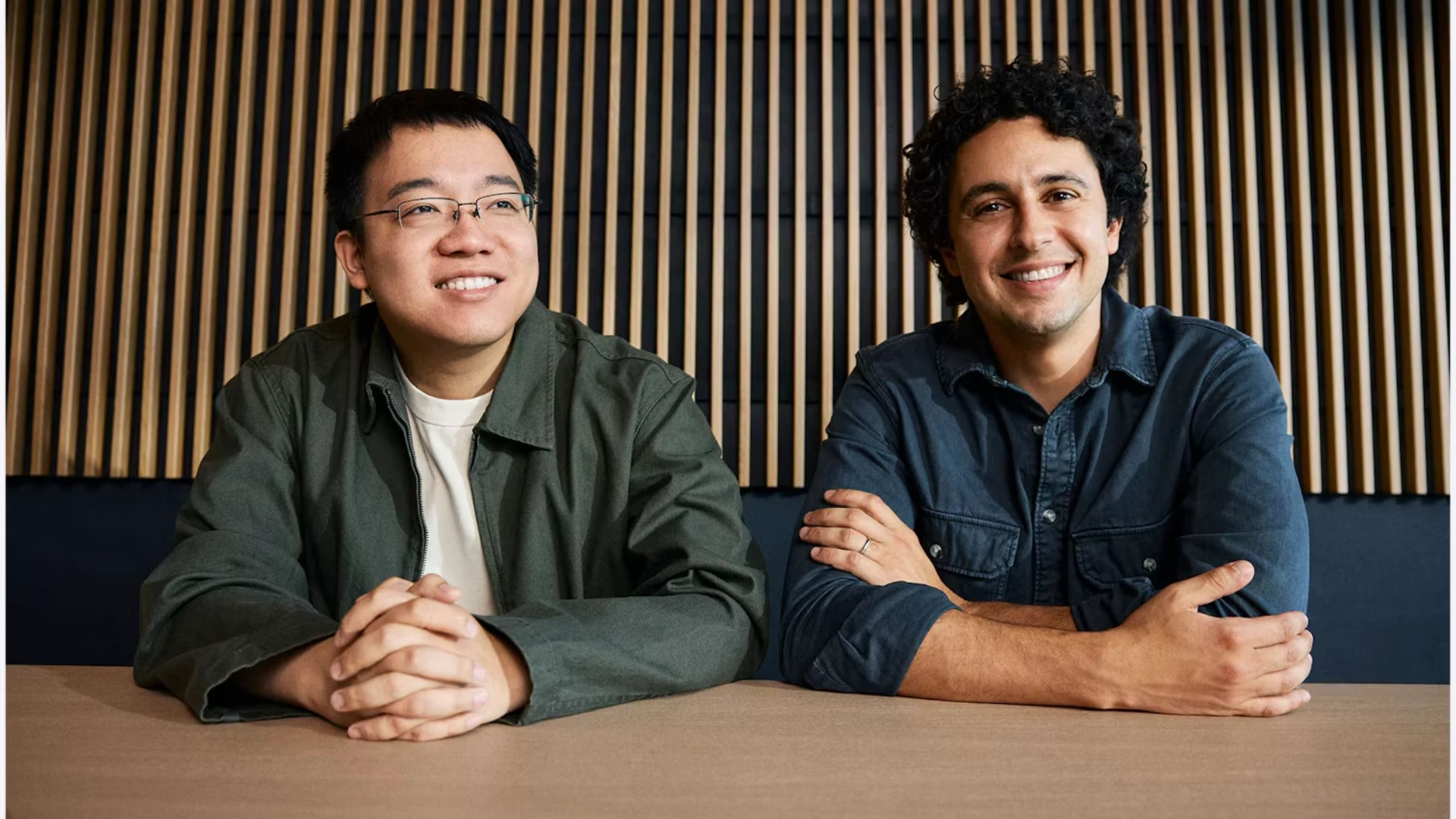
Genesis AI co-founders Zhou Xian, left, and Théophile Gervet Credit: Genesis AI Genesis AI has raised $500m in a Series A round at a $3.5bn valuation, the Paris-based robotics startup said on Tuesday. Khosla Ventures, Premji Invest and Eclipse co-led the round. Bloomberg first reported the talks back in July. “We’re working to build the world’s best general-purpose robot, one that works reliably in the real world, day after day,” co-founder and CEO Zhou Xian said. Nvidia’s NVentures, AMD Ventures, Bpifrance, HSG, Samsung Next and Ericsson Ventures also took part, The Wall Street Journal reported.
Angel investors include former Google CEO Eric Schmidt, Xavier Niel and former Tesla CFO Zach Kirkhorn. The money will fund building and deploying its robots, starting in factories and warehouses, Genesis said in its announcement. Zhou told Reuters it will also go into producing more Eno robots and expanding data collection and training. Gloves, a model and a robot on wheels Zhou and president Théophile Gervet, a former Mistral AI research scientist, founded the company in 2024.
It raised a $105m seed round in July 2025 and builds its own model, hardware and simulator. Its model, GENE, learns from people wearing sensor gloves, which Genesis says map one to one onto its robot hands. More than 100 workers around the world wear the gloves and headset cameras, TechCrunch reported. The company also runs a simulator, Genesis World, to test the model across millions of scenarios.
Eno, its first robot, has two arms on a rotating wheeled base and no humanoid head. “I don’t understand why robots need a head because … it doesn’t even have a brain living there,” Zhou told Reuters. From pilots to production Genesis has built 30 to 40 Enos and is piloting them with a few undisclosed customers, TechCrunch reported. A contract manufacturer will start mass production in the US next year. Genesis is testing Eno with South Korea’s LG CNS in manufacturing and logistics.
It expects a wider rollout in 2027, Reuters reported. Zhou said hardware is the main bottleneck. The company’s robot hands last only a few weeks of regular work before they need replacing, he told TechCrunch. In a demo for the outlet, Genesis’s model ran a pair of off-the-shelf arms.
They packed and labelled a box on the first run, then fumbled on the second. “I think next year, sometime next year, we’ll have a robotics model that just works out of the box,” Zhou told the Journal. The round follows other large robotics raises this month, including Path Robotics, which raised $300m. Get the TNW newsletter ✕ Close Get the TNW newsletter Get the most important tech news in your inbox each week.












Leave a Reply