
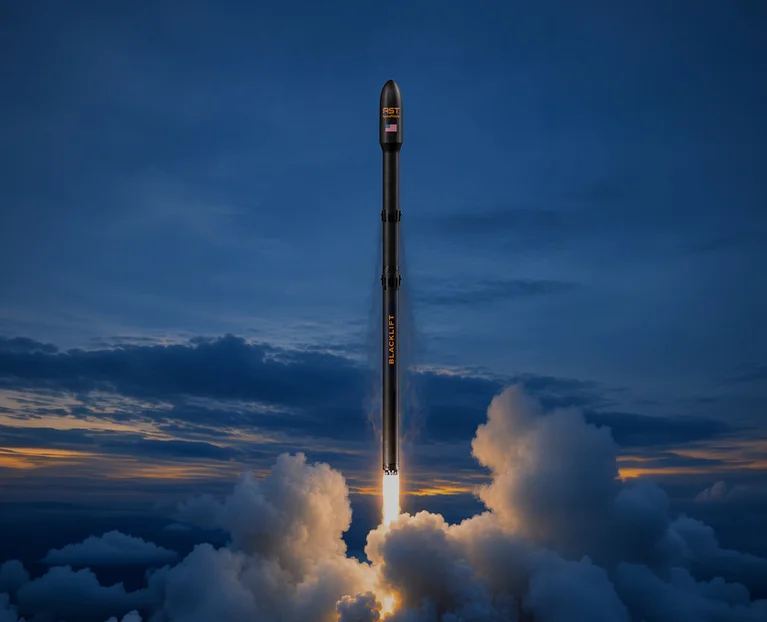
Text settings Story text Size Small Standard Large Width * Standard Wide Links Standard Orange * Subscribers only Learn more Minimize to nav During an hour-long event on Thursday, Abel Avellan, the founder and chief executive of the telecommunications company AST SpaceMobile, laid out his vision for developing a large rocket to launch his Bluebird satellites into orbit. Avellan emphasized, over and over again, that AST plans to build a “simple” rocket. He paraphrased SpaceX founder Elon Musk several times, saying, “the best part is no part.” Avellan emphasized that AST has already procured engines for its proposed Blacklift rocket, asserting that engine development accounts for 80 percent of a typical rocket’s development cycle. “Of course rocket engineers are going to get mad with me, but you can simplify it as a big tank feeding engines,” he said of the rocket. “So big tanks—we know how to do them. We know how to do them.
We know how to do them in composite.” I am not a rocket engineer, and I am not mad at Avellan. But he sure seems to be substantially underestimating the challenge of building rockets. AST feels its hand is forced Avellan also has a problem. AST SpaceMobile appears to be successful in building very large satellites, Bluebirds, that are capable of providing direct-to-cell capability from an orbit about 550km above Earth.
The problem is there is a commercial launch crunch, and the company is struggling to get its satellites on orbit today, and projects to do so into the future. “We’re not doing this thing because we like rockets,” he said during the presentation. “We’re not doing this thing because we want to be in the launch business. We want this because we have so much demand of our satellites, and as you have seen it, we cannot get enough launches.” The Blacklift rocket will be “simple,” he said, because it will be solely tailored to lift five Bluebird satellites into low-Earth orbit at a time. It will have 20 metric tons of lift capacity, a reusable first stage, and launch twice a month from a pad at Wallops Flight Facility in Virginia that formerly served the Antares rocket. It will have all composite tanks and three stages.
And, Avellan said, it will be ready to launch in 2028. If that timeline sounds preposterous, that’s because it is. However, Avellan believes AST has a workaround: It is committed to spending $1.3 billion to acquire enough engines for the first three Blacklift launches from Firefly Aerospace, as well as a license to manufacture additional engines over time. He is basing this argument on the Miranda first stage engine, which he said is “ready to fly.” But that’s not quite true.
However, Miranda has not yet completed its formal qualification campaign, much less flown on an orbital rocket. Firefly chief executive Jason Kim said this week that qualification testing remains underway. Moreover, little is known publicly about the readiness of the upper stage engine, Vira, that AST is also acquiring from Firefly for its rocket. Composites are hard, too Another questionable assertion is Avellan’s statement that 80 percent of a rocket’s design cycle is due to engine development. “I mean, that has been proven,” he said.
I’m not sure it has. Propulsion is definitely one of the most challenging aspects of developing a rocket. However, Rocket Lab, which has considerably more experience building orbital rockets than AST, has suffered two significant setbacks this year involving Neutron’s composite propellant tanks. These structures, as well as flight software, avionics, stage separation, payload fairings, qualification testing, and so much more, can lead to significant delays in the development of a rocket.
And then there are the equally difficult challenges of scaling from development to production at rate, and recovering the first stage. Avellan and Scott Wisniewski, president of AST SpaceMobile, also did not get into specifics about financing the development of Blacklift. The company has already invested more than $1 billion in engines and will likely need billions more to develop and scale the vehicle. Wisniewski said AST SpaceMobile plans to spend “several hundred million dollars” in 2027 on Blacklift development, but it is not clear whether that includes milestone payments to Firefly for propulsion.
According to the company’s balance sheet, it had about $2.8 billion in unrestricted cash and cash equivalents at the end of September, and it has historically been successful in raising additional capital. “We don’t insult them” The company’s underlying business plan makes sense. There is a potentially very large market for space-to-ground connectivity for mobile devices. Traditional mobile service operators are growing wary about working with SpaceX, viewing the company as a competitor rather than a partner. And the recent issues with Starlink in Ukraine may lead some nations to seek alternative partners for these services. “First of all, I’m no Musk, and I don’t want to be,” Avellan said on Thursday. “We partner.
We don’t compete. We enhance. … Why? Because we partner with them. We don’t compete with them.
We don’t insult them. You know, we partner with them.” SpaceX went from being a rocket company to operating satellites. Now Avellan and AST seek to go from being a satellite operator to launching rockets. Consider that SpaceX took eight years from its founding to launch the Falcon 9, another five years to successfully land a booster, and several more years to achieve a high flight rate.
AST is seeking to compress much of that process into approximately two years. But rocket science is in no way simple, and the road ahead is sure to be rocky. Avellan said AST doesn’t really want to be in the launch business. Given how difficult, demanding, and expensive the launch business is, he may get his wish in a few years.
Eric Berger Senior Space Editor Eric Berger Senior Space Editor , about the rise of SpaceX; and Reentry, on the development of the Falcon 9 rocket and Dragon. A certified meteorologist, Eric lives in Houston. 0 Comments







Leave a Reply