
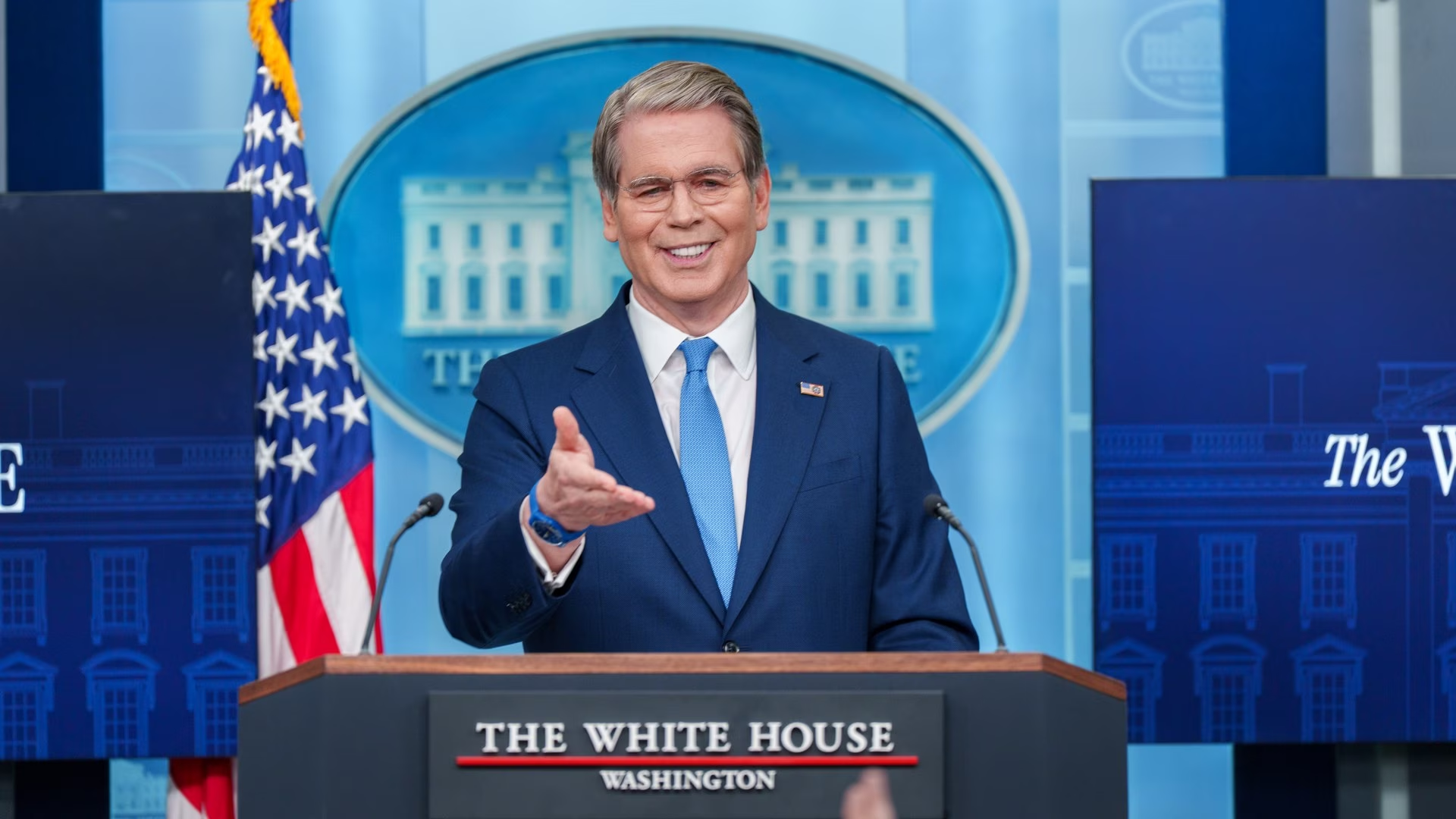
Treasury Secretary Scott Bessent at a White House press briefing in Washington on 28 May 2026 Credit: Official White House Photo by Abe McNatt “The proposed regulations would strengthen the existing Outbound Investment Security Program to prevent our adversaries from using U.S. investment to develop critical technologies that threaten U.S. national security,” Treasury Secretary Scott Bessent said. The US Treasury published the proposal on Thursday. The outbound investment rule would widen limits on American money for chips, AI and other sensitive tech. It targets China, Russia, North Korea and other “countries of concern”, the Associated Press reported.
The programme began in 2023. That year, then-President Joe Biden signed an order that limited some US investment in Chinese chips, quantum computing and AI, AP noted. What the rule covers The draft carries out the COINS Act, which Congress passed in its 2026 defence bill. US investors would have to tell Treasury about some deals.
The rule would ban others. The law names five sectors. They are chips, AI, quantum technology, supercomputing and hypersonic systems. Treasury used its power under the act to add biotechnology.
The list of countries also grows. Beside China, including Hong Kong and Macau, it now names Cuba, Iran, North Korea and Russia, according to Treasury’s fact sheet. It also names Venezuela under Nicolás Maduro. But the same document says Venezuela does not meet the draft’s definition today. ‘Super intelligence systems’ The draft swaps the term “AI systems” for “super intelligence systems”.
Treasury cites President Trump’s 29 September executive order, which renamed AI as super intelligence. Treasury would widen its ban on investing in these systems, the fact sheet said. Investors would lose the current option to simply report such deals. Breaking the rules could bring civil penalties up to the maximum under the International Emergency Economic Powers Act.
Treasury could also force investors to sell. “The proposed regulations are designed to address risks that can arise when foreign adversaries try to benefit from U.S. investment in key technology sectors,” said Christopher Pilkerton, Treasury’s assistant secretary for investment security. Comments until December The Federal Register will publish the draft on 26 October. Written comments are due by 7 December. Final rules will follow and set the start date.
The move comes six days after China proposed its own controls on exporting advanced AI models and chip designs. Last week, Pentagon technology chief Emil Michael said that export controls could curb AI labs. Get the TNW newsletter ✕ Close Get the TNW newsletter Get the most important tech news in your inbox each week.











Leave a Reply