
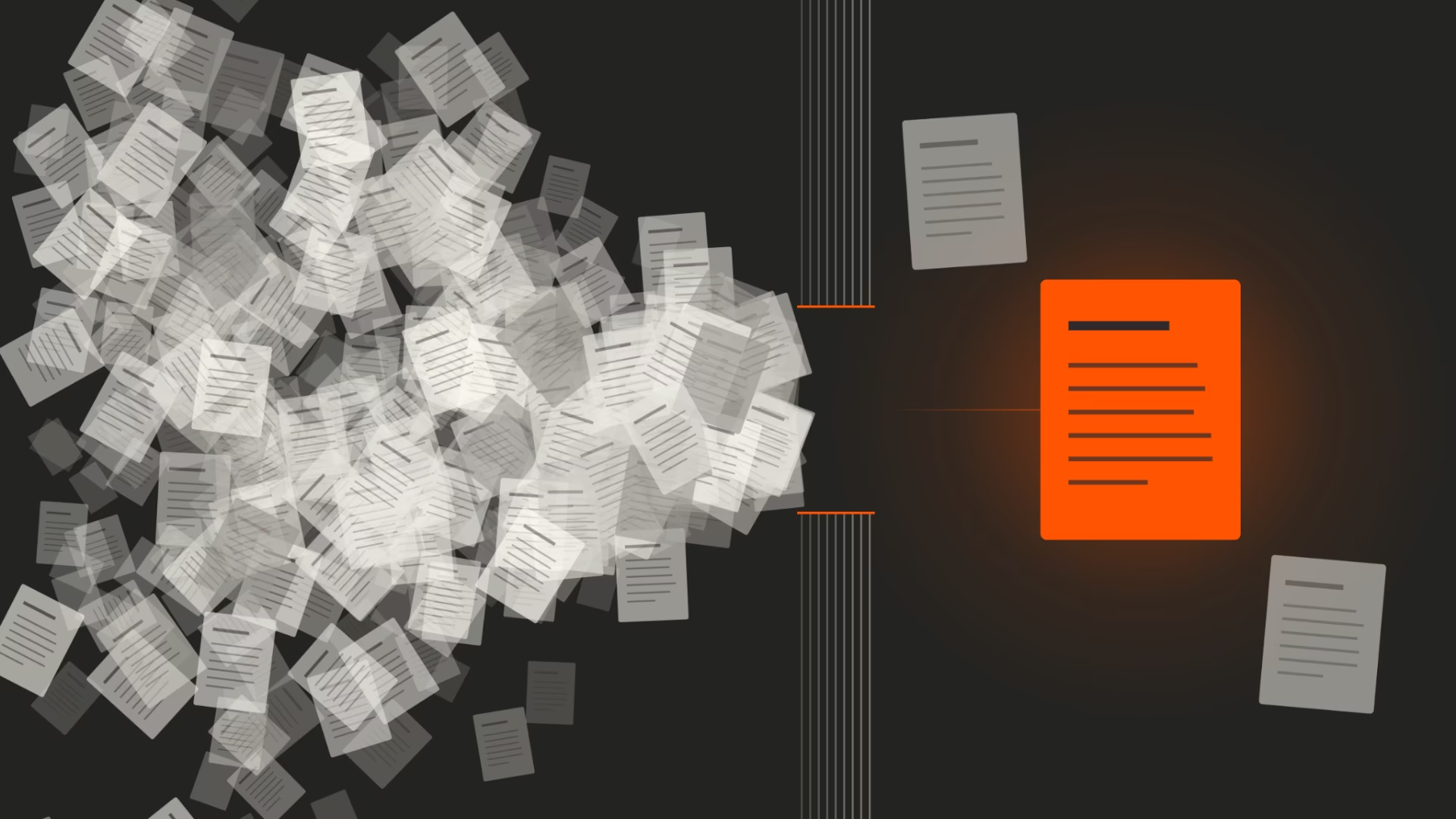
Credit: QED Science AI agents can read dozens of scientific papers in minutes. So why are researchers still struggling to keep up? Because finding papers was never the hardest part of the job. The hard part is deciding which ones are worth reading, and whether the science behind them holds up.
And rather than lightening the load, AI discovery tools don’t look at that part at all. They often just produce a longer reading list. The volume problem was severe before agents arrived. The number of articles indexed in major research databases rose by roughly 47% between 2016 and 2022.
Automating the search without improving judgment simply moves the bottleneck from finding the papers to sorting through them for relevance. That is the problem QED Science, the science validity engine, set out to solve with Insights Feed. It is a personalized discovery tool for life-science researchers that launched this week. More Output, Not More Insight “Researchers don’t need another tool that gives them more papers to read.
They need a better way to decide which science they can build on,” says Niv Mastboim, CEO of QED Science. The issue is structural. Most discovery tools, AI-powered or not, still start from a query. Keyword search surfaces work that mentions the right protein or disease whether or not it bears on a scientist’s actual question.
Meanwhile, the paper from a neighboring field with the method that could fix a stubborn experiment may never appear. Agents inherit those blind spots from their prompts, then summarize everything with similar confidence. So a shaky preprint and a rigorous study can come back looking almost identical. The Discussions During Coffee Break are Lost For more than a decade, researchers had a different kind of filter: Science Twitter, where scientists debated preprints, found collaborators on other continents and stumbled on work they would never have thought to search for. “Science Twitter used to be like the best part of conferences… the coffee breaks!” Mastboim says.
As the platform changed, that filter eroded. A 2025 survey by David Shiffman and Julia Wester found that learning about new developments in their field had been scientists’ most common reason for using Twitter. And two-thirds said it had become much less useful for exactly that. Many of those scientists have since moved to Bluesky.
But any social feed still depends on who you follow and what they happen to share, while agents return only what you already knew to ask for. “At its best, Science Twitter did that filtering almost by accident,” Mastboim says. “It was like a colleague you trusted sharing something you personally would never have thought to search for. That’s what we set out to emulate.” Starting From the Researcher, Not the Query Insights Feed starts from the researcher instead of a query. It builds a profile from their published work, stated interests and any manuscripts or proposals they choose to upload. Updated daily, it recommends papers, preprints and conference abstracts across 250 life-science subfields.
It can flag a paper for a single relevant method or result, even one that would never show up in a keyword search or comes from a field the researcher doesn’t follow. Each pick includes a “Why you should care” summary explaining how it’s tied to the researcher’s own work. QED Science processes uploaded materials without human review to protect unpublished research. Preprints are a deliberate focus, since findings often appear there well before journal publication.
For Dr. Sauvik Das Gupta, a postdoctoral researcher at Japan’s National Institute of Advanced Industrial Science and Technology (AIST), that’s incredibly useful. “Preprints give you a more contemporary picture of how the field is developing, and with the Insights Feed you can see that in parallel to how you’re developing your work,” he says. “This is something I hardly got from a simple web search, because they mostly give you published papers, and journals are often quite slow.” A Signal for Quality, Not Just Relevance Relevance is only half the problem. For select preprints, Insights Feed also displays a QED Score, a quality signal drawn from the same engine QED Science uses to evaluate manuscripts for its Paper Review tool. The aim is to help researchers judge promising work on the strength of the science rather than on journal or institutional reputation, and to know what’s worth their attention before committing to a full read.
More than 20,000 researchers from institutions in more than 70 countries already use QED Science’s scientific judgment engine, and Insights Feed is free for academics. Mastboim sees the launch as a shift in how researchers keep up with their fields. “Researchers shouldn’t have to keep running the same search and accepting or wondering what they’ve missed,” he says. “With Insights Feed, every morning the science that matters to their work is already there.” Get the TNW newsletter ✕ Close Get the TNW newsletter Get the most important tech news in your inbox each week.













Leave a Reply