
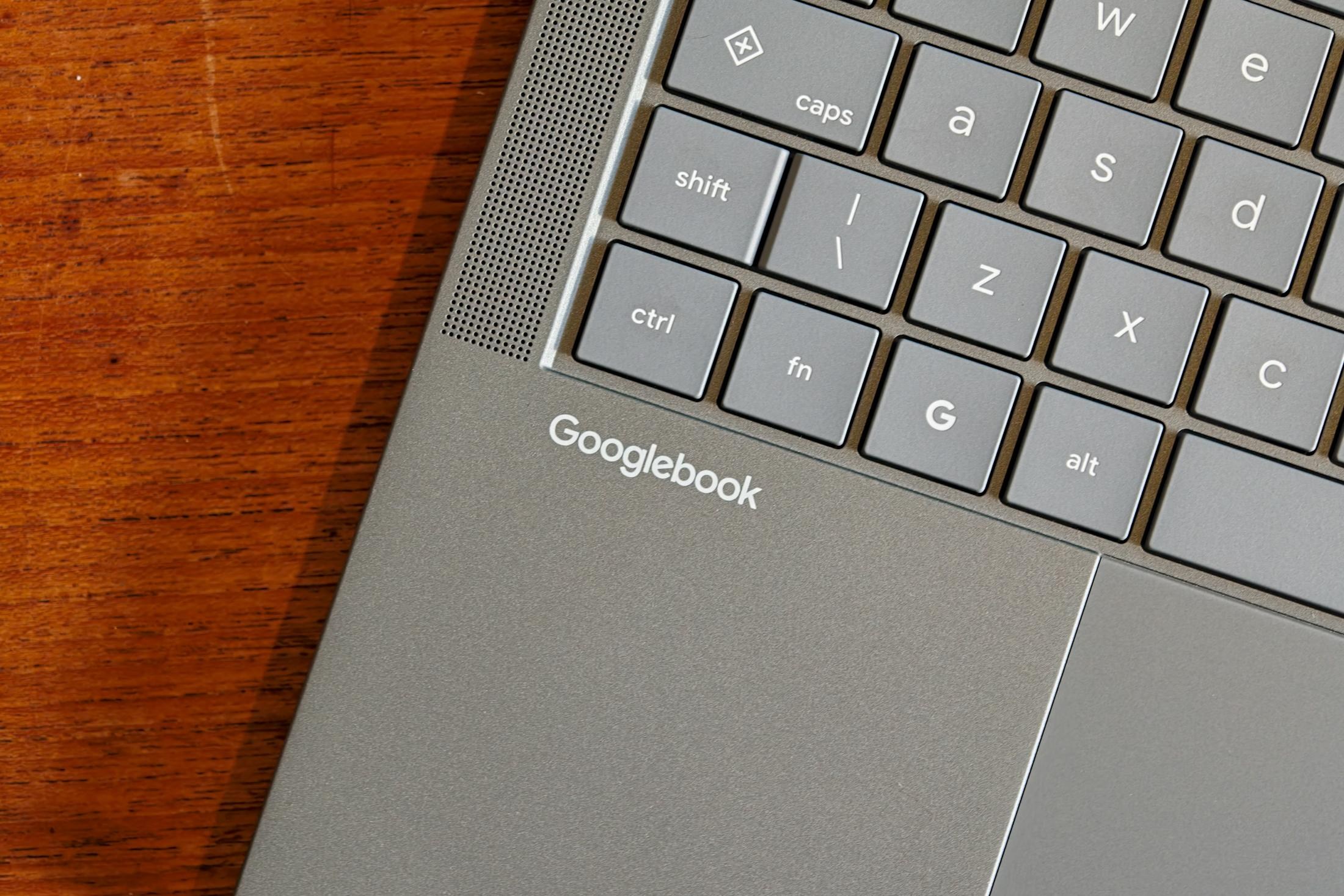
TechReportGoogleAndroid is the best and worst thing about GooglebooksAs an Android devotee, I want to love Googlebooks — but they don’t make it easy.As an Android devotee, I want to love Googlebooks — but they don’t make it easy.by Dominic PrestonOct 12, 2026, 2:00 PM UTCShareGiftI’ve been testing two Googlebooks: this Asus model, and HP’s too.Dominic Preston is a news editor with over a decade’s experience in journalism. He previously worked at Android Police and Tech Advisor.My first week with the new Android-powered laptops has been about as rocky as anyone’s, but I’ve slowly learned to like them, even if love still feels a ways off. Every moment that’s impressed me has been thanks to Android, whether I’ve been accessing a native version of a useful app or quickly checking my phone notifications from the laptop user interface.But man, sometimes it just sucks.Phone connectivity is flaky, app casting is awkward, and file-sharing seems to be flat-out broken. And that’s just the interaction between a Googlebook and a phone — I have a whole other set of gripes about the limitations of native Android apps on a $1,000 laptop.RelatedA week with Googlebooks: four notes from our testing so farOur first five impressions of Googlebooks — exciting but underbakedIf Googlebooks ever become a success, Android is going to get the credit.
But if it all goes wrong, that’s exactly where the blame will lie too. So far, success feels a lot further away than failure.During setup you can copy every app from your phone, or just a selection.The Googlebook setup process is Android through-and-through. It’s similarly quick, just a few minutes from beginning to end, including time to register biometric logins, log into a Google account, and connect it to a phone to find your apps and backups. There’s a little variation in the exact setup between the Asus and HP models I’ve been testing, but mostly just whether it defaults to installing every app from your phone or only the desktop-optimized ones.Things get janky once you’re into the OS, though.
Even if you use an Android 17 phone to set up the laptop, it’s unlikely to remain connected afterwards for features like file sharing and app casting. Fully pairing either of my Googlebooks to a phone has required toggling cross-device settings on both devices, multiple restarts, and the occasional prayer, until the two devices find each other. Moving to a new Wi-Fi network broke things for me all over again, requiring a restart of the Googlebook to get the devices back talking to each other — and yes, they need to be on the same Wi-Fi network to talk, and to have Bluetooth enabled too, so the connection won’t work when you’re offline.My Asus Googlebook has now formed a pretty reliable connection to an Oppo phone I’ve been reviewing, though it still refuses to recognize any other phones; my HP model flits between that Oppo and the Vivo X Fold 6, occasionally connecting to both at once. Yesterday, for the first time all week, it connected to my Pixel 11 Pro Fold, after both laptops had stubbornly ignored that phone for days — even though it’s Google’s own hardware.Downloadable episodes!
On a laptop! This low key might be my favorite thing about Googlebooks.I’ve loved elements of the Googlebook experience. It’s great being able to access quick, compact, desktop versions of apps I’d normally be stuck using through a web browser on my MacBook. It’s even better that some of those apps have different functionality for being mobile versions: being able to download series from HBO Max or Netflix and watch them offline means a Googlebook could replace my Android tablet, which is mostly just a device for watching movies on planes at this point.But many, many more apps are a headache to use on an Android laptop.
Some don’t have desktop-optimized versions — the mobile version of Slack is truly unworkable in a desktop environment, and Adobe’s Android apps are pale shadows of their desktop selves. Others claim to be “Optimized for desktop” in the Play Store, but in practice that usually means they’ve stretched the UI to fit a desktop scale and included basic mouse and keyboard support — “basic” being the operative word, with most not recognizing right-clicks or occasionally shifting into a portrait view. “Made for desktop” seems to be the only Play Store tag that really counts for much, and I’ve only seen it on a handful of apps.Some apps claim to be “Made for desktop,” everything else is likely to feel at least a little awkward.Even Google’s own apps are often limited. Chrome is the worst offender, since you’re likely to use it so much. Google insists this is a desktop version of the browser, but it lacks feature parity with other platforms: there’s no support for switching profiles, opening tabs in a split view, or creating custom search engine shortcuts.
Those are just the omissions I’ve run into from my daily MacBook workflow, and there are no doubt countless more.And despite Google’s promise that Chromebooks offer the “entire Play Store library,” that isn’t entirely true. I’ve already run into two apps that I simply can’t install from the Play Store — Bluesky and the login authorization tool Okta. It’s not an Intel issue either, as Google alluded to on Monday: the Arm-based HP Googlebook also won’t run either app.My laptop needs aren’t complex: I spend 90 percent of my time on my work MacBook Air inside Chrome and Slack, and most of the rest in Photoshop or Lightroom. But all four are subpar on a Googlebook right now, and it’s all because they’re fundamentally Android apps that can’t compete with true desktop alternatives.If Android apps on your laptop aren’t enough, Googlebooks also let you cast the Android apps on your phone to your laptop.A dedicated app drawer shows everything installed on your connected phone.Some version of Android app casting or mirroring has been around before on both Windows and Chromebooks.
The difference in Google’s implementation is that instead of mirroring the whole phone UI, you cast specific apps, either through a dedicated app drawer in the taskbar or by tapping into a synced notification from your phone. Those apps still run on the phone itself — which gets a notification that an app is casting — but are controlled via the PC.It’s not well-suited to streaming music or video, or running multiple apps at once, but that doesn’t seem to be the intent anyway. Where casting shines is in quickly dipping into an app without reaching for your phone and unlocking it, like updating a payment in the settlement app Splitwise or sending a quick message in WhatsApp. I’ve really enjoyed being able to dive in and out of a phone task from my laptop, while minimizing the risk of getting distracted by Instagram.Casting is clever and mostly works well, but I think I’ve found it useful because I’m new to the Googlebook and haven’t set every app up yet.
Google argues it’s designed for apps you might want to use from your laptop but wouldn’t want to install there, but that’s a pretty short list, especially given that installing an Android app is generally quick, painless, and a minimal drain on storage. Long-term, I’m not sure how often I’d want to cast a mobile app when I could just install a native version, especially since you can’t copy and paste between native apps and cast versions, or access the Googlebook file system when casting.Casting Bluesky from the phone just doesn’t work, made worse because the Bluesky app is unavailable for Googlebooks otherwise.Even when the cross-device connection runs smoothly, some apps — especially secure ones like my authorization app or banking app — won’t run. Others try to open but don’t work: my credit card app breaks on bootup, while Bluesky renders text illegibly. Casting some apps even create rendering issues when I next op





Leave a Reply