
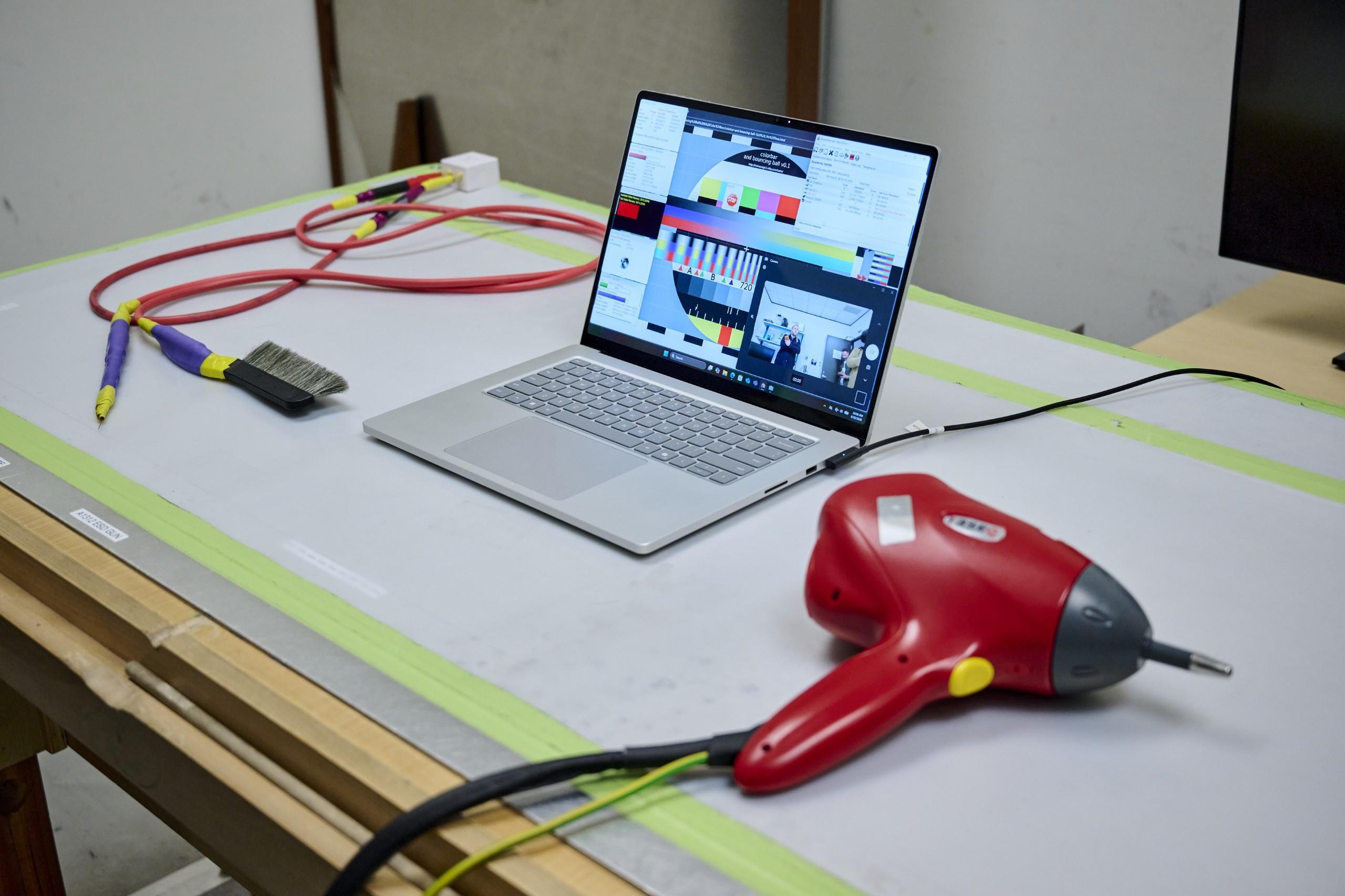
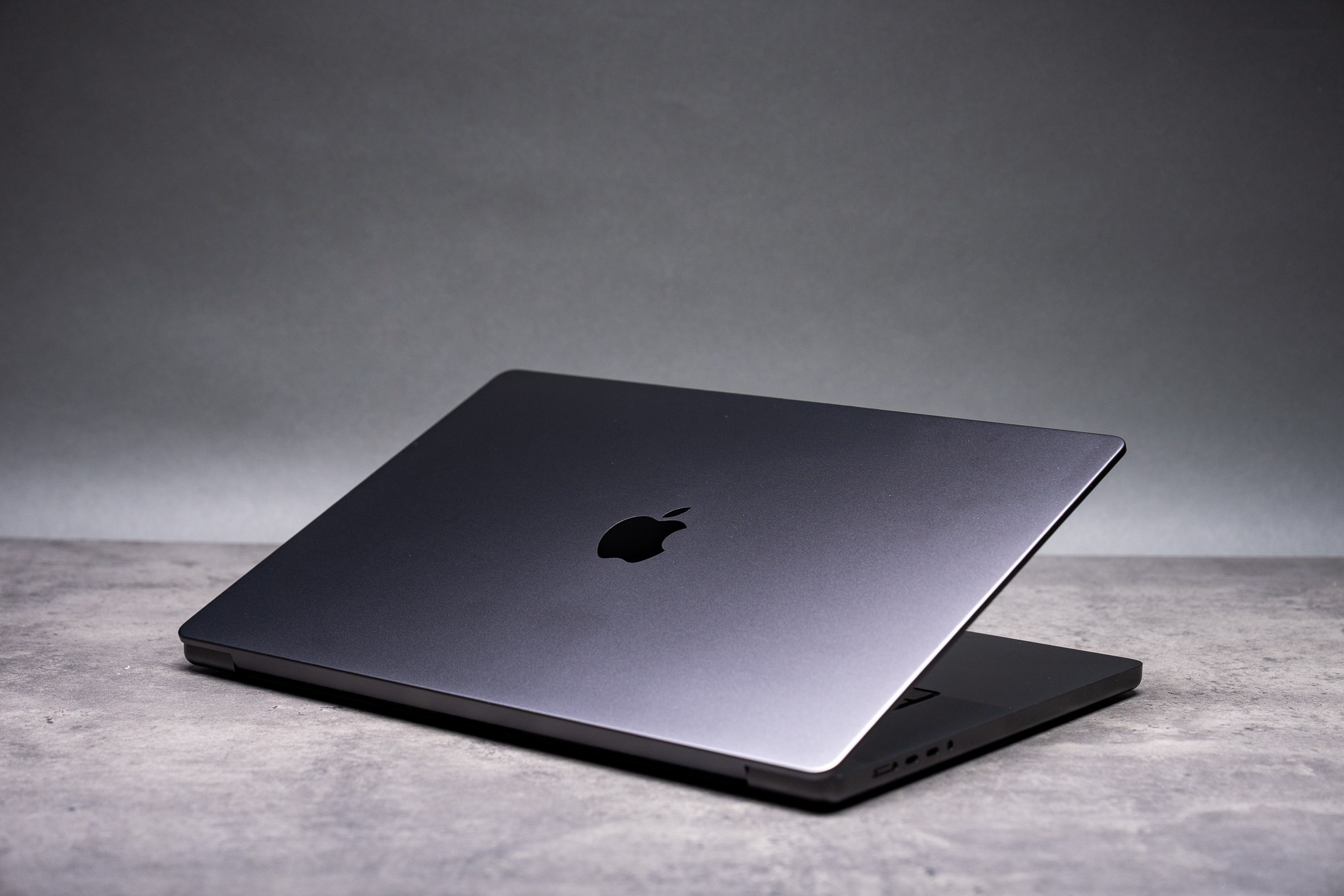
TechGadgetsLaptopsHow Microsoft built its MacBook Pro competitorInside the lab where Microsoft is preparing the Surface Laptop Ultra, the debut platform for Nvidia’s RTX Spark.by Tom WarrenPhotography by Meron MenghistabOct 7, 2026, 6:00 PM UTCShareGiftTechGadgetsLaptopsHow Microsoft built its MacBook Pro competitorInside the lab where Microsoft is preparing the Surface Laptop Ultra, the debut platform for Nvidia’s RTX Spark.by Tom WarrenPhotography by Meron MenghistabOct 7, 2026, 6:00 PM UTCShareGiftTom Warren is a senior correspondent and author of Notepad, who has been covering all things Microsoft, PC, and tech for over 20 years.Before Microsoft releases a laptop to the public, it needs to put the device through its paces. That all happens inside a windowless, warehouse-like lab on the company’s Redmond, Washington, campus, where the team developing Surface devices programs robots to press their buttons thousands of times, pelts devices with radio waves from giant antennas, and builds contraptions that drop objects from increasingly daring heights to see whether the products can hold up.Its latest laptop, the product I’m here to see, really needs to hold up. The Surface Laptop Ultra isn’t just another high-end config of the Surface Laptop, it’s the debut platform for Nvidia’s RTX Spark — Nvidia’s entrance into the world of Arm-based PC chips, and a chance to blow expectations out of the water when it comes to what a Windows laptop is capable of.Microsoft’s last big laptop push — the Copilot Plus PC initiative from 2024, focused initially on Qualcomm chips — “was really aimed at MacBook Air,” says Brett Ostrum, corporate vice president of Surface at Microsoft. Microsoft also wanted to go head-to-head with the MacBook Pro, but existing chips weren’t capable enough. “We knew that was not going to reach MacBook Pro-level compute.”Around that time, Nvidia began privately showing off what its forthcoming chips could handle when it came to AI, and Microsoft jumped at the possibilities. “It literally made a ton of sense for us in terms of how to go and compete with the MacBook Pro,” Ostrum says. “Nvidia was a logical choice.” The two companies have spent the years since working hand in hand, resulting in today’s launch.The Surface Laptop Ultra can also play games.The “nightfall” color option looks a lot like Apple’s space gray.Much like the MacBook Pro, the Surface Laptop Ultra is a high-end device.
It has a CNC-machined aluminum body, a huge trackpad, chicklet keys, and fan vents tucked underneath its slightly elevated base. There’s an array of ports, including HDMI and an SD card slot, and a high-res touchscreen that looks great up close. A model with 24GB of RAM starts at $2,599.99, and if you want the very top of the line with 128GB of memory, you’re looking at $5,899.99.Some of that price comes from the Ultra being one of the most polished laptops you can buy in the Windows world. But some of it comes from the all-new chip inside: the first of Nvidia’s RTX Spark line, which is supposed to bring essential components of Nvidia’s workstation-level power down to a portable device.
The RTX Spark chips inside the Surface Laptop Ultra are geared toward local AI workloads and creative tasks. Microsoft says it’s powerful enough to handle compressed 280 billion-parameter AI models running locally — models that needed to run in the cloud only a year ago. The RTX Spark is both CPU and GPU, and the GPU should be able to handle Blender 3D objects with ease and cruise through other creator workloads in Premiere or Photoshop thanks to the system’s use of unified memory — the same approach Apple takes on its M-series chips.Microsoft is largely positioning the Ultra at developers who want a powerful GPU for local AI compute, but it’s also targeting the creatives and professionals who would buy a MacBook Pro. “It is built for us,” says Jit Hirani, lead designer for Surface devices. “We come to work to build a product for ourselves.”PreviousNext1/5The Surface Laptop Ultra parts aren’t held together with glue.Because Nvidia combined the CPU and GPU on the RTX Spark, Microsoft was able to make its Surface Laptop Ultra motherboard smaller and increase the size of the fans on the device. The space inside the machine is maximized for battery, with components neatly arranged in a black grid.
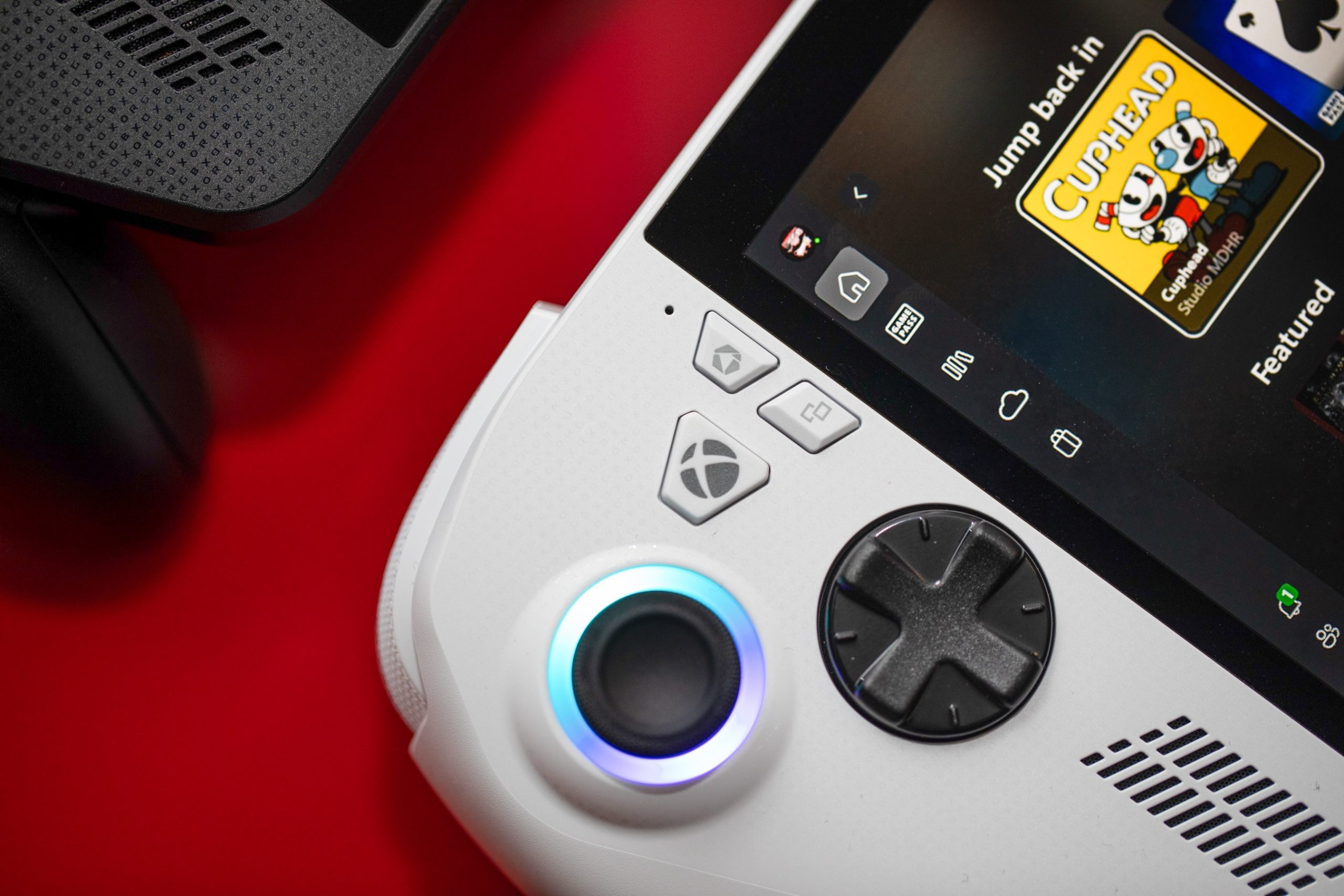
Microsoft has also focused on repairability, with no components glued down and clearly marked instructions and QR codes throughout for disassembly.As this is an Nvidia laptop, you can also use it for gaming, but I get the sense that Microsoft is treading carefully about positioning this as a gaming laptop. The RTX Spark is an Arm chip, which means most games aren’t native and will have to be emulated. Still, I got a chance to briefly play an emulated version of Gears of War: E-Day on the Surface Laptop Ultra, and it ran buttery smooth, even transitioning between the laptop being plugged in and running off battery without a performance hit.The Surface Laptop Ultra has the world’s first built-in magnetic USB-C charging on a laptop.Microsoft put a lot of care into making sure the Ultra’s design was as premium as a MacBook’s, too. One detail in particular stood out to me: the way Microsoft has cleverly reworked its magnetic Surface Connect charging port.“I think we gave our engineering team probably about 300 iterations on this journey because it’s the world’s first built-in magnetic connect for USB-C,” says Hirani. “The single constraint from day one when we designed the product was that we could not change the universal USB-C [port].”Instead of losing a USB-C port to some custom solution, Microsoft has built a magnetic attach around the USB-C port instead.
It feels very similar to the original Surface Connect, complete with a charging light and no need to precisely guide it into place. You can even disconnect the cable from the 140-watt charging block, reverse it, plug it back in, and use the regular USB-C port on the other end to charge all of your other devices.Ostrum tells me that Microsoft spent years “grinding on this” to make a magnetic USB-C charging solution, so my question to him is: Will we see this on more Surface devices? “We’ll wait and see,” he says. “We have been super passionate about that experience. This is the place where we wanted to introduce it to the world.”The amount of testing and product iteration that went into getting this charging port right is mirrored in the rest of the Surface Laptop Ultra. Microsoft has an Automated Experience Lab (AXL) tool that helps the teams measure the responsiveness of a device, beyond just regular benchmarks.
That’s anything from measuring how long it takes to launch Microsoft Teams to how fast it is to type letters on a keyboard.The “BB8” robot that tests the Surface Laptop Ultra.This is all automated through an Arduino board that can inject code onto a system and measure its response times. Microsoft has created what it affectionately calls its own BB8, a robot that helps the thousands of engineers working on getting the stability just right for the RTX Spark platform.“We have engineers at Nvidia that are working on power, performance, graphics, stability, and Wi-Fi,” explains Ostrum. “When they work on each of those things, they have to complete their code, check it into Nvidia. Once Nvidia is satisfied with the stability and the performance of that chunk of code, it flows into the next branch.”That process creates a lag, sometimes lasting weeks, between Nvidia, Surface, and Windows all getting code ready for a new platform like RTX Spark. To speed things up, Microsoft has got Nvidia engineers uploading code remotely to this tiny robot that automates tasks that regular consumers do with a laptop.
The miniature robot can unplug USB-C devices, use the touchscreen, pen, trackpad, and open and close the devic







Leave a Reply