
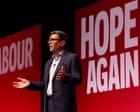
The UK prime minister, Andy Burnham, spoke emotionally at the conference about the death of his father. Photograph: Michael Bowles/ShutterstockView image in fullscreenThe UK prime minister, Andy Burnham, spoke emotionally at the conference about the death of his father. Photograph: Michael Bowles/Shutterstock‘He feels more relatable’: Burnham’s conference speech wins praise from drifting Labour votersThe UK prime minister has earned his party a rehearing but the battle of public opinion is not yet won“He’s offering what no other politician has offered for a long, long time. He actually feels like he’s one of us,” was how Neil, a geography teacher, described Andy Burnham in our focus group on Thursday night.Neil wasn’t alone in his praise: this group of Labour 2024 voters – some of whom had drifted to Reform, the Tories and Greens during the Starmer era – provided the most positive reception for a politician since Boris Johnson at the height of his Covid-vaccine bounce.Talent manager Megan said: “He feels more relatable to people from a working–class background.” Simran, another teacher, added: “He’s obviously better than the others in the short timeframe that he’s been in his position.” Linda, who works in banking, went further, saying: “He actually sounds like a person that’s there, not just for himself, but for all of us, which none of the others prior to him came across that way.”That praise for Burnham stood in stark contrast to his predecessor Keir Starmer who was, as contracts manager Craig put it, “just a shambles from the moment they won the election up until he left”.
None of the group felt it would have been better to keep the former PM in place.Labour’s conference also seemed to have cut through the noise of the attention economy. Most had picked up at least something from the prime minister’s speech and liked what they had heard. After seeing the clip where Burnham spoke emotionally about the death of his father, the group, in contrast to some online criticism, appreciated a politician willing to show his human side.But what about two of the substantive proposals in the speech?On Burnham’s pledge to revisit the UK’s relationship with the EU there was an overwhelming feeling Brexit had been a disaster. Most in this group had voted to remain, but even those like Darren, a field manager at a utility company who had voted Leave, felt cheated: “The amount we got told we were putting into the EU, I thought we could stand on our own two feet … we got told quite a few things, and it didn’t quite happen.”Interestingly, for most of the group it was less the economic impact of Brexit that worried them but instead the sense of isolation in an increasingly dangerous world and a less reliable US.But, and here is the caveat, once it came to the specifics of what rejoining may involve the group were far more cautious.
Many felt if Britain could rejoin on its old terms it would be a “no brainer”. But the participants now worried that Britain would end up with a worse deal as punishment.Neil said: “I voted remain, but we’ll get utterly shafted if we rejoin … what do they gain?” Others described feeling 50/50 and nervous about where we’d end up. If this group is anything to go by, Burnham’s biggest fight won’t be in the principle but the details.What about Burnham’s other, more controversial, pledge that the triple lock would be reformed to pay for social care? The discussion here revealed two things.
First the rise in wages is less salient to people than other bits of the lock; most of the group felt as if their wages had not kept up with inflation for a long time anyway, so pensioners would not really lose out. As Linda put it: “My salary has not been increasing that greatly.”Second, reforming care is a real priority. For Tariq, who works in the pharmaceutical industry, this was an example that “sometimes you need to take hard decisions”.But the mood definitely shifted when the group were played a clip from Unite leader, Sharon Graham, opposing the move. Suddenly some participants worried this was “taking off pensioners” while others asked “couldn’t the highest earners fund it instead”.And the group were even more negative when they read former Institute for Fiscal Studies chief Paul Johnson’s analysis that triple lock reform wouldn’t pay for a national care service in the near term and so taxes would have to rise.None of the group were willing to pay more taxes, personally, for care.
Simran said: “If the income tax increases any more, you’re going to find people are going to migrate.” Joanne, who works in dentistry, added: “I feel rather selfish about it because I don’t want to pay any more tax … people just can’t afford to live a decent life at the moment.”This led to a wider discussion about the budget and people’s worries that, while Burnham had done some “small things”, was it just going to be, as Linda put it, “robbing Peter and paying Paul”.If this group is anything to go by, Burnham is impressing the voters who put Labour into office in 2024, and has earned his party a rehearing that Starmer simply could not. But beyond the top line, big questions remain on the details. The Labour leader can be happy with the reception for Tuesday’s speech but definitely cannot afford to rest on a post-conference glow in the battle for public opinion on his plans.(Participants’ names have been changed)Explore more on these topicsAndy BurnhamLabour conferenceLabourLabour conference 2026Labour party leadershipBrexitSocial carenewsShareReuse this content




Leave a Reply