
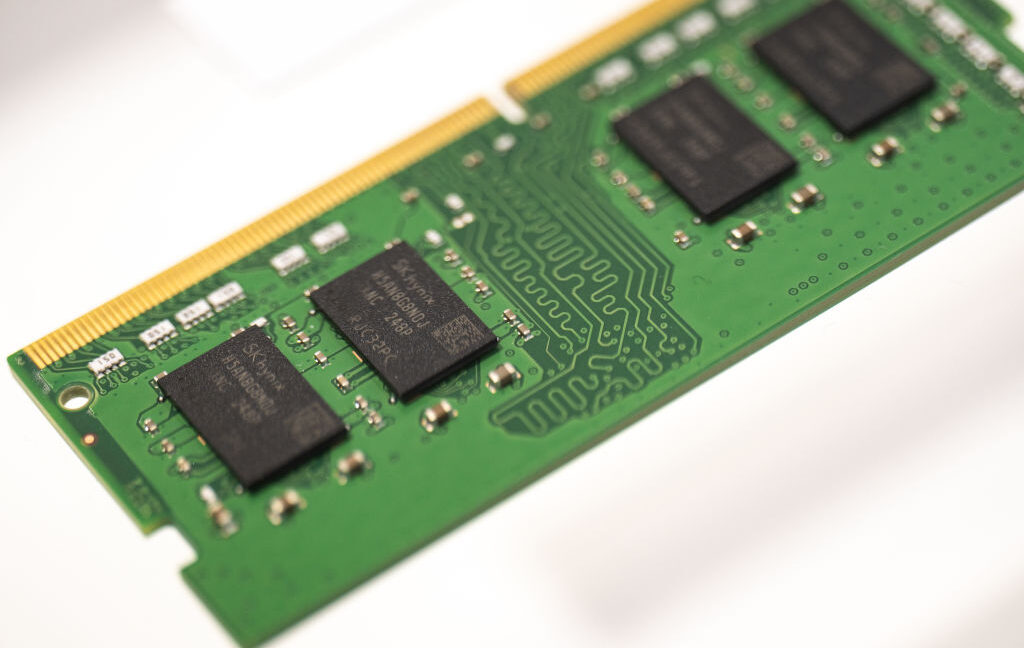
Text settings Story text Size Small Standard Large Width * Standard Wide Links Standard Orange * Subscribers only Learn more Minimize to nav Micron and Samsung executives this week said the memory shortage will continue for at least the next couple of years. Micron CEO Sanjay Mehrotra expects demand for the firm’s memory to exceed its available supply over that period, he told investors last night. Micron no longer sells consumer RAM, and Mehrotra’s statements refer to Micron’s business-to-business sales of high-bandwidth memory (HBM) for AI and DRAM for servers. However, his comments also have implications for consumer devices.
Manufacturing capacity is prioritizing memory for AI and servers, limiting the supply of memory manufactured for consumer devices. “Overall, supply-demand environment is only getting tighter,” Mehrotra said, per a transcript from Seeking Alpha. Micron plans to open new clean rooms for memory manufacturing in 2028, but Mehrotra expects supply to remain limited. “Even after they are built, even after first wafer output, production ramps up only gradually in the clean rooms,” he said. “That’s just the nature of what it takes to bring up production, and with HBM going from 3E to a greater mix of 4 and 4E, and with the trade ratio that exists, that … creates headwinds with respect to supply growth. Node transitions of the future give less productivity gain per wafer as well.” Seventy-five percent of Micron’s memory output for 2027 is already accounted for, and most of the company’s current memory sales discussions are about 2028, the CEO said. Additionally, demand for HBM is surpassing demand for Micron’s DRAM. “For 2027, a large part of the volume is already sold out for 2027 for HBM, and the prices are much higher than 2026 prices,” Mehrotra said.
Micron doesn’t know when its supply will catch up with demand because the “demand trends of larger models, growing context, more concurrency, greater agents across enterprise, and consumer only continue to drive greater need for memory [and] greater need for memory content, as well as for higher performance memory,” Mehrotra said. Mehrotra’s statements are supported by comments that Kim Taewoo, EVP at Micron competitor Samsung, made this week. He said HBM will account for almost 30 percent of DRAM manufacturers’ wafer capacity in 2027, compared to 20 percent this year, Reuters reported. That would limit the amount of DRAM made for consumer devices.
This year, Micron’s Crucial brand stopped selling RAM to consumers. It announced the change in December 2025, with EVP and chief business officer Sumit Sadana pointing to AI driving demand for data center memory and Micron’s interest in improving “supply and support for our larger, strategic customers in faster-growing segments.” Consumers have already felt the memory crunch, as the shortage has raised costs for prebuilt PCs and pushed OEMs to offer lower RAM configurations at higher prices. Prices for other types of gadgets, including smartphones, streaming sticks, and gaming consoles, are also up. Scharon Harding Senior Technology Reporter Scharon Harding Senior Technology Reporter 28 Comments Comments Forum view Customize








Leave a Reply