
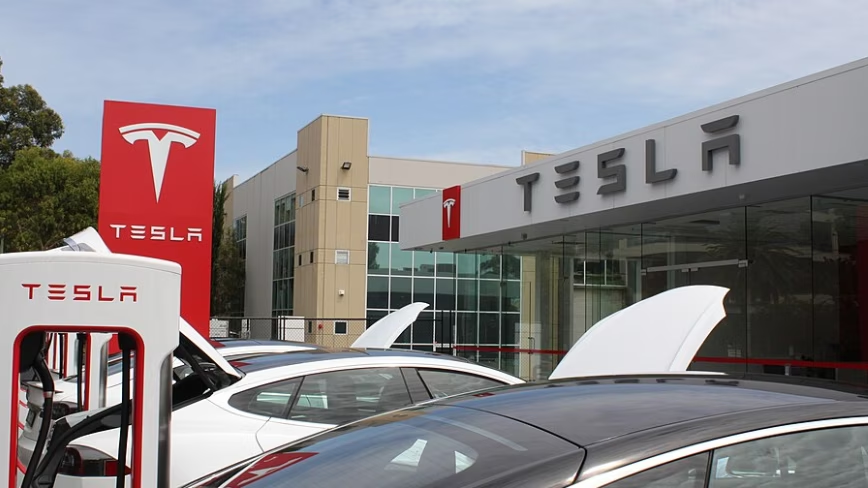
Tesla store with cars and charging stations Credit: Jeremy from Sydney, Australia Tesla has built a prefabricated Supercharger unit that ships pre-assembled with eight stalls and a 1.2MW power cabinet, cuts installation cost by 20% and can be unloaded with a forklift, with the first site live in Bavaria. A single unit exceeds the 1,050 kW that European rules will require from every pool on the core road network by the end of 2027. Tesla has built a Supercharger that arrives pre-assembled on a lorry, and the first site using it is already live in Germany, InsideEVs reported. The Accordion unit bundles eight stalls, a power cabinet and the cabling into one package.
V4 dispensers and a V4 cabinet mean up to 500 kilowatts to a car, from a cabinet rated at 1.2 megawatts. Two units fit on a single truck, which is 16 stalls a delivery. Each pair of stalls comes mounted on its concrete base at the factory, and a forklift takes them off the trailer. It is close to the Folding Unit Supercharger Tesla launched in America earlier this year, with the stalls grouped in pairs rather than hinged.
Tesla says installation costs 20% less than a conventional build and commissioning is instant. It is designed for sites where the parking bays have already been marked out. The company did not say where the first one is. It is at the FC Bayern store in Irschenberg, Bavaria, between two fast-food restaurants, and photographs suggest it went live last month.
The number that matters is not 500. European charging rules require every pool on the core road network to deliver at least 1,050 kilowatts by the end of 2027, no more than 60 kilometres from the next one. One Accordion cabinet clears that on its own. Europe is not short of chargers.
Public points passed 1.1 million in 2025, and the bloc exceeds the capacity it owes per registered electric car by more than 180%. Twenty-three of the 27 member states are at more than double the required figure. It is short of particular ones. Transport and Environment counts 70 well-placed pools, 22 in Spain, 11 in Poland and seven in Romania, that would close more than 90% of the remaining gaps on the core network.
Germany is not on that list. There is a second argument for eight stalls. Kempower found eight-plug sites running near 10% utilisation against about 2% for two-plug sites, while more power barely moved the figure. On that reading the stall count is the more interesting number on the spec sheet.
Tesla is separately building robotaxi-only Superchargers, which would not count towards the European targets because the public cannot use them. Cheap to install is only worth something if the plug is open. Also tagged with












Leave a Reply