
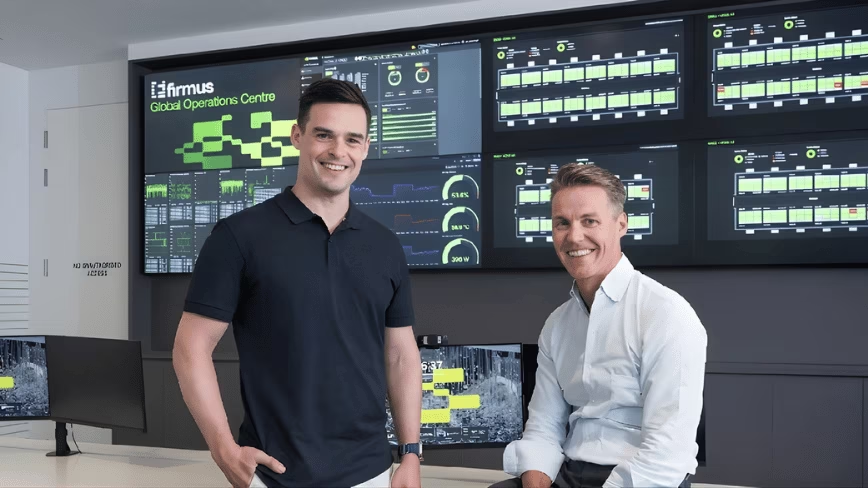
Following a recent deal with OpenAI for compute resources across two Malaysian locations, Firmus surpassed 900MW in secured overall capacity. The artificial intelligence pioneer took on the role of anchor client under a multi-year arrangement, though monetary details were withheld. Southeast Asian developers are preparing to expand data facility volume fourfold, with Malaysia representing the largest portion of a 6GW planned pipeline. Additionally, a 360MW facility scheduled for Batam, Indonesia was agreed upon in June, providing access to as many as 170,000 Nvidia accelerators by 2028 and anticipating $25bn to $30bn in guaranteed long-term revenue across six years starting in the first quarter of 2027.
Domestically, the company’s major undertaking is Project Southgate, which targets 1.6 gigawatts across five Australian locations by 2028, commencing with a $4.5bn initial construction phase in Launceston, Tasmania. This initial effort forms part of a massive $73.3bn overall strategy, backed partially by a $10bn debt facility organized by Blackstone in February. Operating in Australia has grown more complex following July regulations requiring AI data infrastructure to supply more energy to the grid than it consumes by investing in new renewable generation. Firmus utilizes a specialized liquid-cooled architecture that relies on practically zero water while reducing energy consumption by one-third, positioning it uniquely against rivals under these environmental requirements.
Seeking a public debut on the Australian Securities Exchange, the enterprise is pursuing a capital raise of up to $5bn in what could become a record-setting listing for the trading floor. Internal target figures evolved rapidly within five months, shifting from an April goal of raising $2bn at a $5.5bn market value to a valuation exceeding $10.5bn by August. Potential backers began pre-IPO discussions around the middle of this month, with formal Australian investor presentations planned shortly thereafter. Exact share pricing, floating dates, and the percentage of equity offered publicly remain unannounced.
Originally established in 2019 in Singapore to mine Bitcoin, the firm has transitioned into artificial intelligence infrastructure with prominent backing from both Nvidia and Blackstone. Out of its seven projected AI production plants, only two facilities are actively drawing power and operating at present. Converting signed long-term sales commitments into functional megawatts remains a classic challenge for digital infrastructure builders seeking public market funding. As roadshow presentations progress, market participants must evaluate whether the company’s $10.5bn appraisal reflects its 900MW in signed commitments or its pair of active operational hubs.









Leave a Reply