
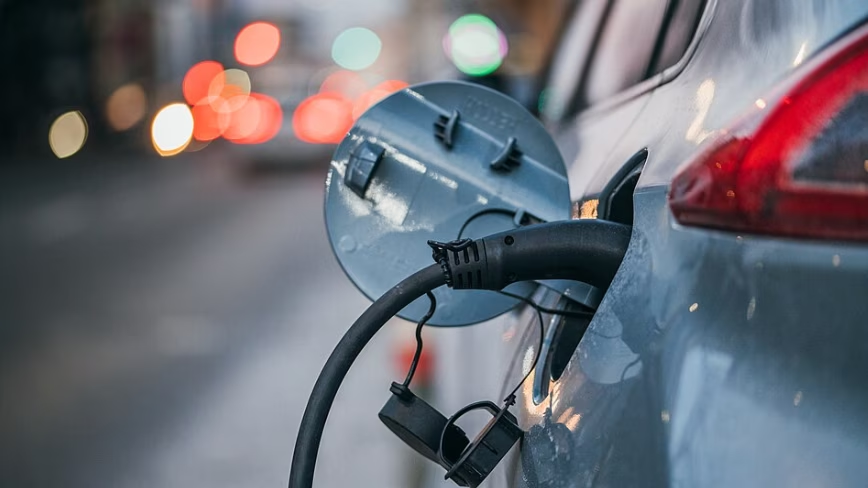
Credit: Ivan Radic / CC BY 2.0 via Wikimedia Commons The ICCT finds battery-electric cars were 33% cheaper to run than petrol cars in the EU last year, or 28% on public charging alone, with combustion energy costs rising up to 36% after February’s oil shock while electricity held steady. Purchase-price parity has been reached in three segments, and the small and lower-medium ones are not among them. Battery-electric cars were 33% cheaper to run than petrol cars in the EU last year, InsideEVs reported, on figures from the International Council on Clean Transportation. Charging only at public stations, the gap was 28%. “Electric car drivers in Europe are paying about a third less than those with gasoline cars,” said Marie Rajon Bernard, the ICCT senior researcher who led the work.
Some of that gap is not about electricity at all. After February’s oil shock, the ICCT found, energy costs for combustion cars rose by between 12% and 36%, while the running costs of battery cars barely moved. Petrol sells for roughly EUR 2 a litre across the bloc. The comparison flatters electric cars partly because the alternative got worse.
Purchase prices are the other half. Battery costs fell about 35% globally in five years, and German EV prices fell 18% in real terms on a like-for-like basis, while combustion prices rose 2%. “Car prices haven’t fallen as quickly as battery costs have,” said Peter Mock, the ICCT’s Europe director. The median price of a new electric car rose 42% over the same period, because carmakers spent the savings on range and performance. Parity arrived in the medium, upper-medium and luxury segments, and not in the small and lower-medium ones.
Those are the segments the Commission’s 4.2-metre category was drafted for. Germany now lists roughly 160 electric models against about 40 in 2020, of which some 35 sit below EUR 30,000. The charging figure will be quoted more than any of this. The EU has close to 1.2 million public points for cars, about eight times the 2020 number, plus 2,450 for heavy vehicles.
Europe’s own rules count kilowatts, not plugs. The alternative fuels regulation sets its targets as installed capacity per registered car, so a plug count says nothing about whether a member state is meeting them. The finding that dropped out of the coverage is about lorries. In Germany the ICCT puts electric long-haul trucks at 11% cheaper than diesel over their lifetime, once toll exemptions are counted.
That is the market where the purchase premium is largest and the case hardest. Cheap small cars are arriving without waiting for the parity the ICCT measures. Dacia moved Spring production from China to Slovenia and held the range under EUR 20,000, an answer about tariffs and assembly lines rather than battery costs.












Leave a Reply