

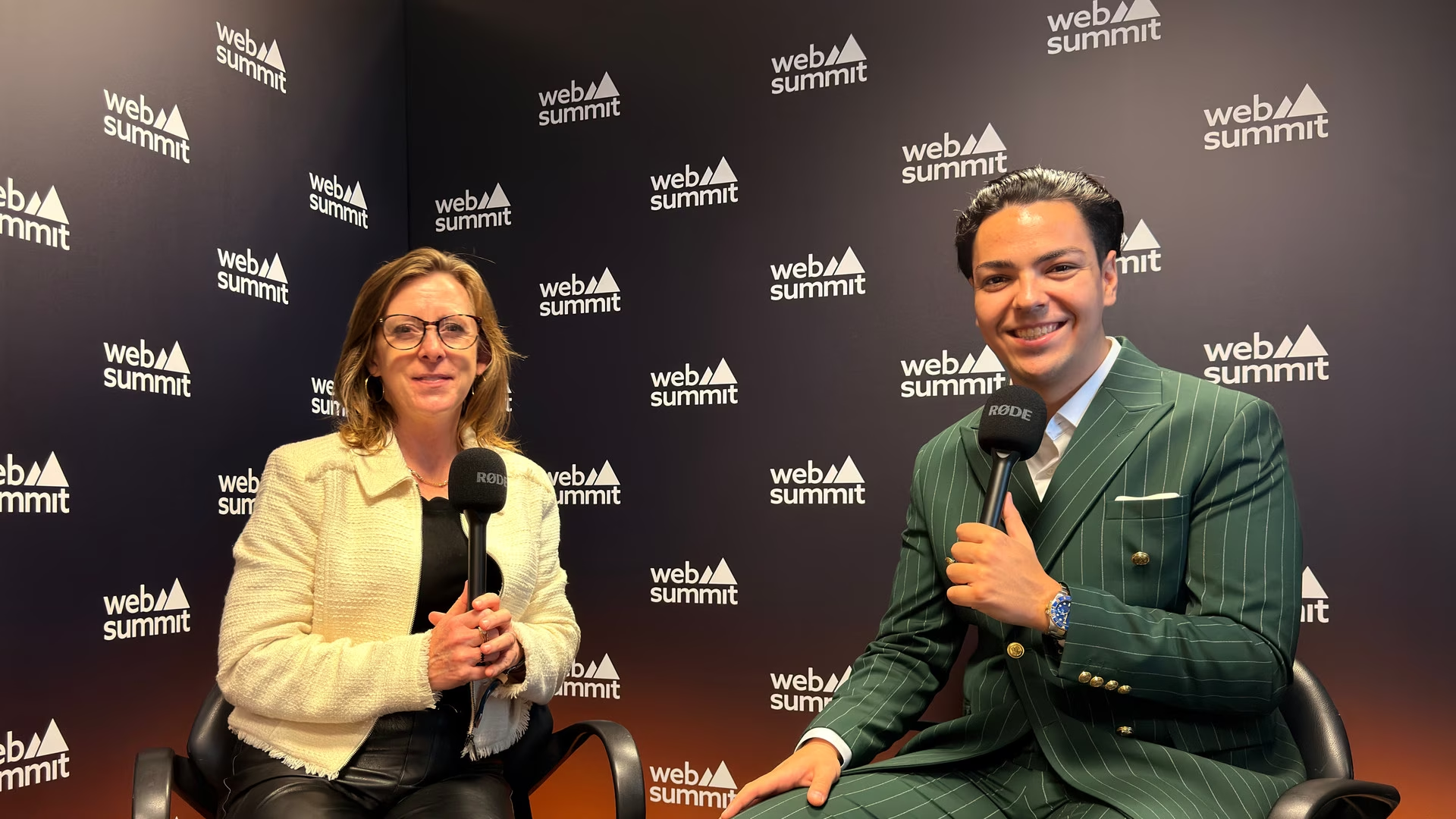
Hila Gil-Dotan, chief marketing officer of Natural Intelligence Credit: Inbal Marmari Ads inside ChatGPT already drive more than 1% of the finance conversions at Natural Intelligence. The channel is only months old, its chief marketing officer, Hila Gil-Dotan, told TNW. The company runs the comparison sites BestMoney.com and Top10.com. But a paid placement and an AI recommendation are two different things, she said.
Independent studies found the advertiser shows up in ChatGPT’s own answer only about 5% of the time, according to Gil-Dotan. It is usually that organic mention that shapes the decision, she said. “Nobody reports on that part yet: there’s no impression, no click, and no shared data on how often a brand was recommended,” Gil-Dotan said. Natural Intelligence answered TNW’s questions on the AI-Era Attribution Blueprint, which the Interactive Advertising Bureau released on 12 November. It sorts every sale into one of three pathways: Human-Owned, AI-Assisted or AI-Executed.
AI-influenced sales are sometimes reported as search or direct traffic, which can send the next marketing investment to the wrong channel, said Caroline Giegerich, the IAB’s vice president for AI. “The AI-Era Attribution Blueprint is honest about what the industry can’t yet substantiate,” IAB chief executive David Cohen said in the launch announcement. No AI agent is buying insurance yet Nobody in finance can give clean percentages for each pathway yet, and the IAB is right to say so, Gil-Dotan said. AI-Executed sales, where an agent completes the purchase, are close to zero in financial services. An agent cannot open a credit card or take out an insurance policy for someone, as regulation and identity checks keep a human in the loop.
Renewals could be the first exception, she said. A business loan could, in theory, roll over automatically. Later, an agent might re-shop someone’s cover after a move or a new baby. Earlier this month, AI models failed Visa’s shopping benchmark for agents.
AI-Assisted sales are the fast-growing middle, but they split in two and only one half is visible, she said. When someone clicks a BestMoney ad in ChatGPT and applies, the company sees the click, the comparison and the partner’s confirmed sale. The other half is the organic answer. What the platforms don’t show From ChatGPT’s ad platform, Natural Intelligence gets impressions, clicks, spend and the conversions the platform reports.
It connects those to its own data: what people compared, what they chose, and whether the partner confirmed the sale. That, Gil-Dotan said, turns a click into evidence. Even the paid side is only partly visible. On Google’s AI Max campaigns, advertisers cannot see how much traffic came from AI Overviews or AI Mode.
Google reports all of it as top-of-page ads. People also see an ad, or click it, and come back weeks later, often through a branded search. “That’s the old last-click problem in a new place,” Gil-Dotan said. Paid search sits at the bottom of the funnel, so the click and the sale line up. Social sits higher, so Meta never relied on clicks alone: it credits conversions after views and engagement, and offers lift tests.
ChatGPT is heading the same way, she said, and now reports one-day view-through conversions next to click-throughs. What advertisers want disclosed AI platforms, ChatGPT and Google alike, should tell advertisers what triggered an ad: the current conversation, or one from weeks ago. They should say whether the brand also appeared in the organic answer, and where, and which sources informed it. AI traffic also needs consistent labels, so it doesn’t vanish into “direct” or “search”, she said.
The IAB’s blueprint also asks AI platforms to disclose whether recommendations are paid or organic and which sources informed them, and to label AI-originated traffic consistently. People also tell chatbots far more than they type into a search box. Search advertisers see the terms they appear for; AI has no equivalent yet. Anonymous, aggregated data could show an advertiser what the people seeing its ads care about most: price, reviews or a particular use.
Platforms should never tie it to an individual user, she said. Number one on ChatGPT, by whose count Natural Intelligence’s pitch called it the top financial advertiser on ChatGPT. OpenAI publishes no advertiser rankings, so the claim rests on independent trackers, Gil-Dotan said. By their counts, BestMoney consistently ranks among the top finance advertisers.
She cited SE Ranking, which counted BestMoney behind more than 13% of all ChatGPT ad units in its study. OtterlyAI found BestMoney advertising in 15 of the 16 industries it tracked, she said. US advertisers spent about $70m on ChatGPT ads in October. ChatGPT visitors arrive at every stage.
After its sites qualify them, their conversion rate on partners’ sites is in many cases very similar to search, she said. She warned against comparing the two on last click, as they often serve the same person at different moments. Natural Intelligence takes a multi-channel approach. “ChatGPT is where people work out what they need, and search is where they go to act,” Gil-Dotan said. Lift, not last click The IAB’s own survey found 44% of ad buyers use branded search and direct traffic as stand-ins for AI influence they can’t track.
That is directionally right but gives the credit to the wrong place, Gil-Dotan said. An AI conversation about life insurance often surfaces weeks later as a branded Google search. But branded search also catches TV, a friend’s tip and social campaigns. Only lift tests can separate AI’s effect from the rest.
Gil-Dotan pointed to Similarweb data in the blueprint, which shows only 8.8% of AI-influenced visits arriving from the AI itself. Most came through search. Natural Intelligence also tracks how often, and in what tone, AI mentions brands in a category. Her advice is to hold back paid AI placements in one region or for one period, then measure total sales rather than AI-labelled traffic.
Brands can’t test organic answers that way. They should track how often AI mentions them for the questions that matter, and how it describes them. “Start now, while AI ad inventory is still relatively uncrowded and cheap to test,” she said. Brands that build that baseline in 2027 will know what AI is actually worth to them, she said. Nor should they measure AI on its own, as consumers move between ChatGPT, Google and Microsoft in a single decision.
Get more TNW on Google Add as a preferred source Read more TNW news @thenextweb Get the TNW newsletter ✕ Close Get the TNW newsletter Get the most important tech news in your inbox each week.







Leave a Reply