
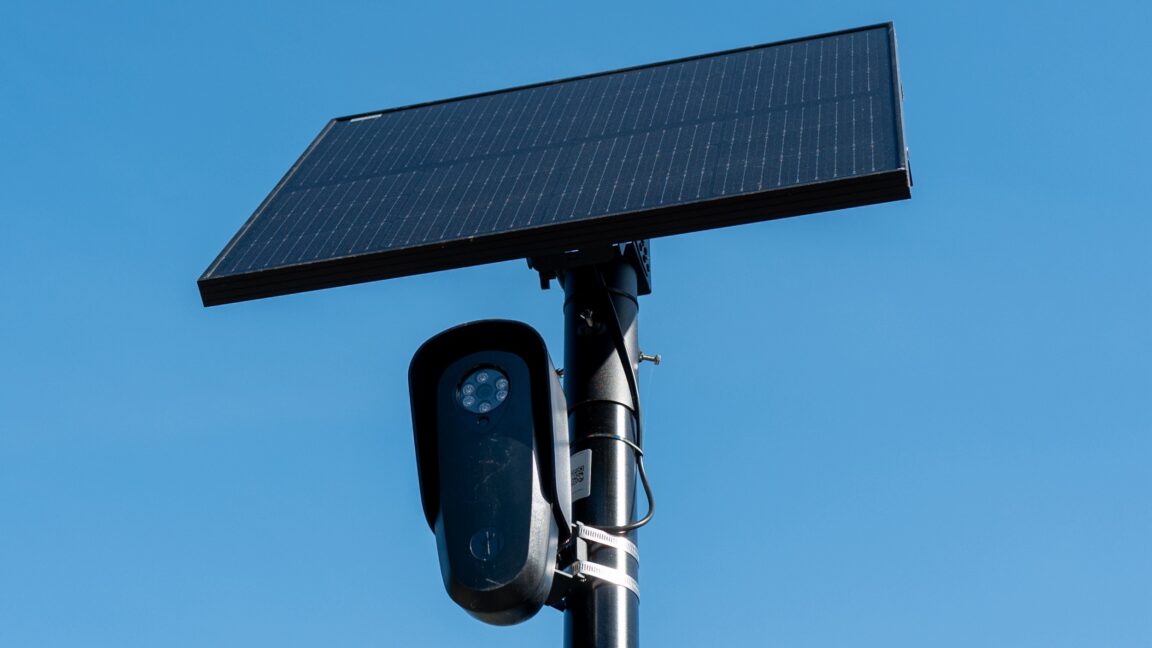
Text settings Story text Size Small Standard Large Width * Standard Wide Links Standard Orange * Subscribers only Learn more Minimize to nav On Monday evening, San Diego’s city council voted to end its contracts with two surveillance equipment vendors, Flock and Ubicquia. San Diego is one of the largest cities to end its relationship with Flock, the startup with an estimated valuation of $8.3 billion. “We fucking won!” Lily Irani of the Transparent and Responsible Use of Surveillance Technology (TRUST) SD Coalition told Ars. She and her colleagues have been among the loudest critics in recent years. “The national energy creating left and right and center coalitions was the major cause [of the political victory],” she said, noting that it was only last month that one of the councilmembers revoked his support, creating an opening for a political majority to halt the surveillance. That council member, Stephen Whitburn, said in an October press conference that he wanted his fellow citizens to “feel safe.” “If Flock cameras are causing many San Diegans to feel unsafe, then they have lost effectiveness as a public safety tool,” he said at the time.
After the Monday vote, San Diego Mayor Todd Gloria said in a social media post that he “respect[ed] the Council’s decision” and would not veto the move to stop operation of the cameras across the city. Andrew Smith, a spokesperson for Flock, told Ars in an email on Tuesday that the company also “respect[s] the city’s decision.” But Flock isn’t happy about it. “When a tool that is actively helping solve violent crimes is removed, public safety moves backward,” Smith wrote. “That has real consequences: cases will take longer to solve, organized retail theft crews will operate with fewer obstacles, a missing child may not be returned home, and victims may wait longer, or indefinitely, for justice.” At Monday’s city council meeting, police representatives said there has been a 20 percent decline in vehicle theft since 2023, with 689 stolen vehicles recovered as a result of the Flock cameras. Rejected The vote is a remarkable turnabout from just three years ago, when the mayor and other municipal leaders urged the city council to approve the program. The city’s wholesale rejection of these devices included Ubicquia’s so-called “smart streetlights” that worked in concert with Flock’s AI-driven automatic license plate reader (ALPR) software.
This cessation of smart streetlights marks the second time in less than a decade that San Diego has experimented with and then ultimately rejected this technology. At one point, San Diego purchased thousands of smart streetlight systems from a different vendor, GE Current, but a previous mayoral administration shuttered them in 2020. After that, Ubicquia acquired the smart city platform and proposed a newer installation of 500 cameras in 2023 in partnership with Flock—and supported by police—which was installed in 2023. At the time, a local watchdog agency, the City of San Diego Privacy Advisory Board, asked the city council to vote down the plan.
One of its board members, Pegah Parsi, wrote on LinkedIn that she is now feeling “vindication.” “A reminder for every city, agency, and institution: if you create an advisory board of experts, listen to them!” she wrote. “Actually, earnestly listen to them. It’s cheaper than learning the hard way. Do better.” That sentiment is echoed by Secure Justice, an Oakland-based advocacy group, which has been studying and monitoring Flock’s issues nationwide. “We’ve documented at least 513 Flock contracts that have ended in red and blue states, in large and small cities,” Brian Hofer, the group’s executive director, emailed Ars. “It’s pretty clear that Americans do not consent to their government tracking them as we go about our daily lives.” 0 Comments












Leave a Reply