
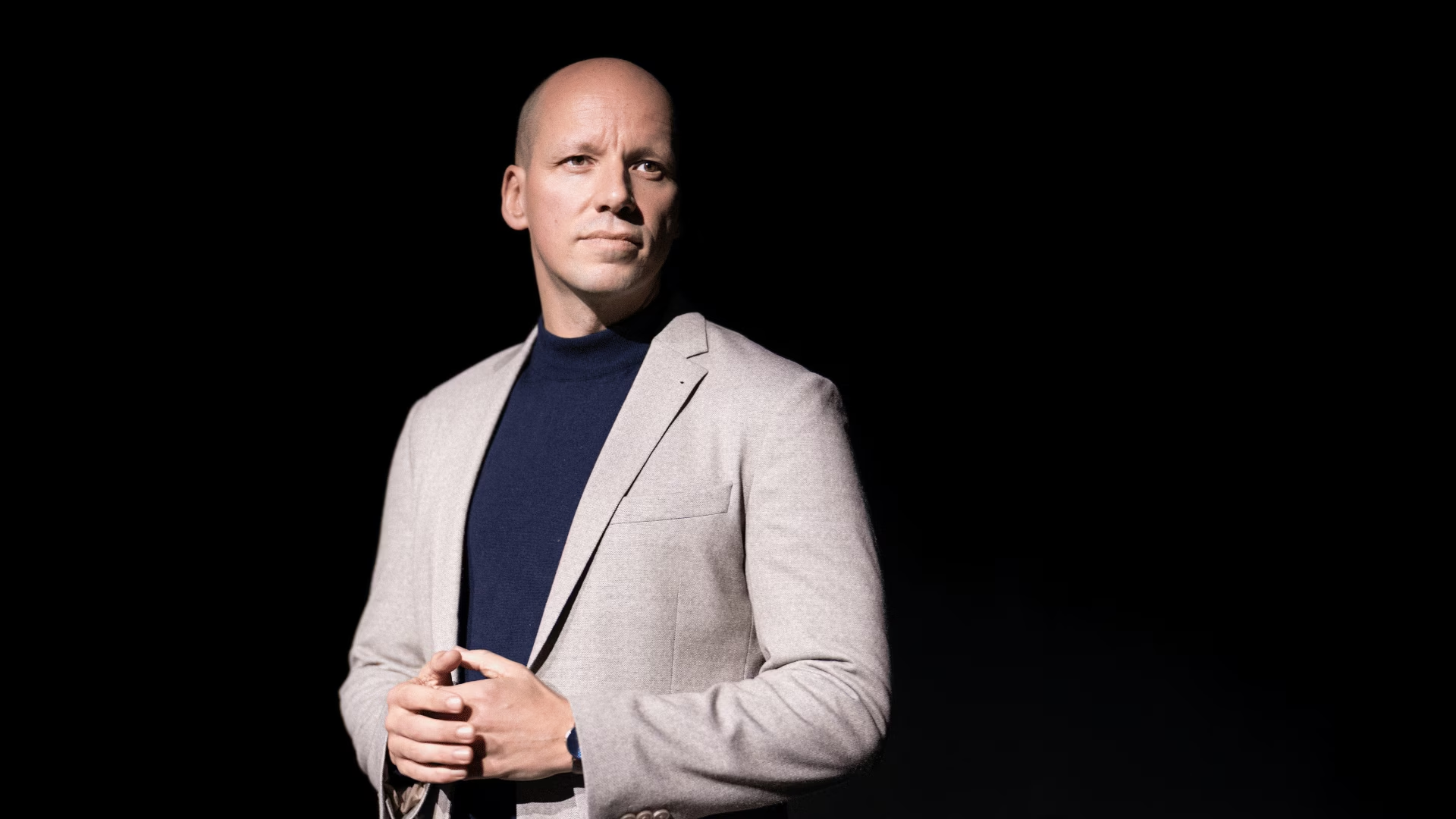
Gundbert Scherf, co-founder and co-CEO of Helsing, at the launch of Clarity at Kraftwerk in Berlin Credit: Helsing German defence company Helsing has launched Clarity, a direct challenge to Palantir. The AI platform helps armed forces turn drone, satellite and sensor data into targets. Helsing says it builds the software in Europe, under European control. Clarity pulls in sensor feeds, open sources, written reports and the systems a unit already runs.
It finds military assets and positions across them and shows them to a human for review. It then prepares the information a weapon needs, Helsing said in a statement on Wednesday. Reuters reported that Palantir’s Maven leads this market. Maven already sits inside Pentagon and NATO workflows.
Helsing did not disclose whether any military already uses Clarity, or when it expects it to enter service. “All armed forces need an intelligence capability that keeps pace with the fight. Autonomous systems play an increasingly important role. It is therefore important to connect what is seen to what is struck,” said Gundbert Scherf, Helsing’s co-CEO and co-founder. Hundreds of agents, one human in charge Helsing Clarity runs hundreds of AI agents built for military use, the company said.
They share one military ontology, a common map of how the data fits together, and one evidence base. Helsing trained the models on real operational data, synthetic data made by AI and simulated environments. The company said humans stay in command. An operator reviews the evidence, selects each asset to engage and authorises every hand-off to a weapon.
Clarity nominates a target only when independent sources agree, confidence is high and an operator confirms. Clarity records every decision with the name of the person who made it. The platform runs on infrastructure the customer owns. It follows NATO standards and the modular open systems approach (MOSA), so it can connect to weapons from any maker.
Europe wants its own tools Helsing is pitching Clarity at European governments that want control over their military software. France’s domestic intelligence service is already dropping Palantir for a homegrown tool. France and Germany have also pledged to build a European rival. In the UK, Palantir lobbied a health minister to consider extending its software to GP records, the Guardian reported.
The campaign group Foxglove obtained the WhatsApp messages under the Freedom of Information Act. Palantir’s £330m contract to run the NHS data platform excludes GP data. Palantir told the Guardian that it is for the government to decide how to roll out the software. Palantir turns to the Democrats In Washington, Palantir is preparing for a Democratic-controlled Congress.
Chief executive Alex Karp spoke to Politico’s Playbook on Wednesday, a week after the midterm elections. “I’ve been a Democrat my whole life. I grew up in a far left environment,” Karp told Politico. He said all of Palantir’s products are “essentially progressive”. Karp also said Trump had mishandled immigration enforcement, which Palantir’s ImmigrationOS software supports under a $30m contract, according to Politico.
Politico reported that Palantir has hired Jon Tester, a former Democratic senator from Montana, as an adviser. The company faces possible congressional investigations. Democratic lawmakers have asked whether Palantir’s work with the Department of Homeland Security enables surveillance of Americans. The company has denied conducting or enabling mass surveillance. “Be transparent, be forthright, address the question straight up,” Tester said of his advice to Karp.
A Palantir executive for CISA On Monday, President Donald Trump nominated Michael LoSapio to lead the Cybersecurity and Infrastructure Security Agency (CISA). CISA is the US civilian cyber defence agency. LoSapio has been Palantir’s chief information security officer since September 2024. CISA has had no Senate-confirmed director since Jen Easterly left in January 2025, Nextgov/FCW reported.
Its workforce has shrunk by about a third. If the Senate does not confirm LoSapio before this Congress ends, Trump would have to nominate him again. The new Senate will have a Democratic majority. Get the TNW newsletter ✕ Close Get the TNW newsletter Get the most important tech news in your inbox each week.














Leave a Reply