
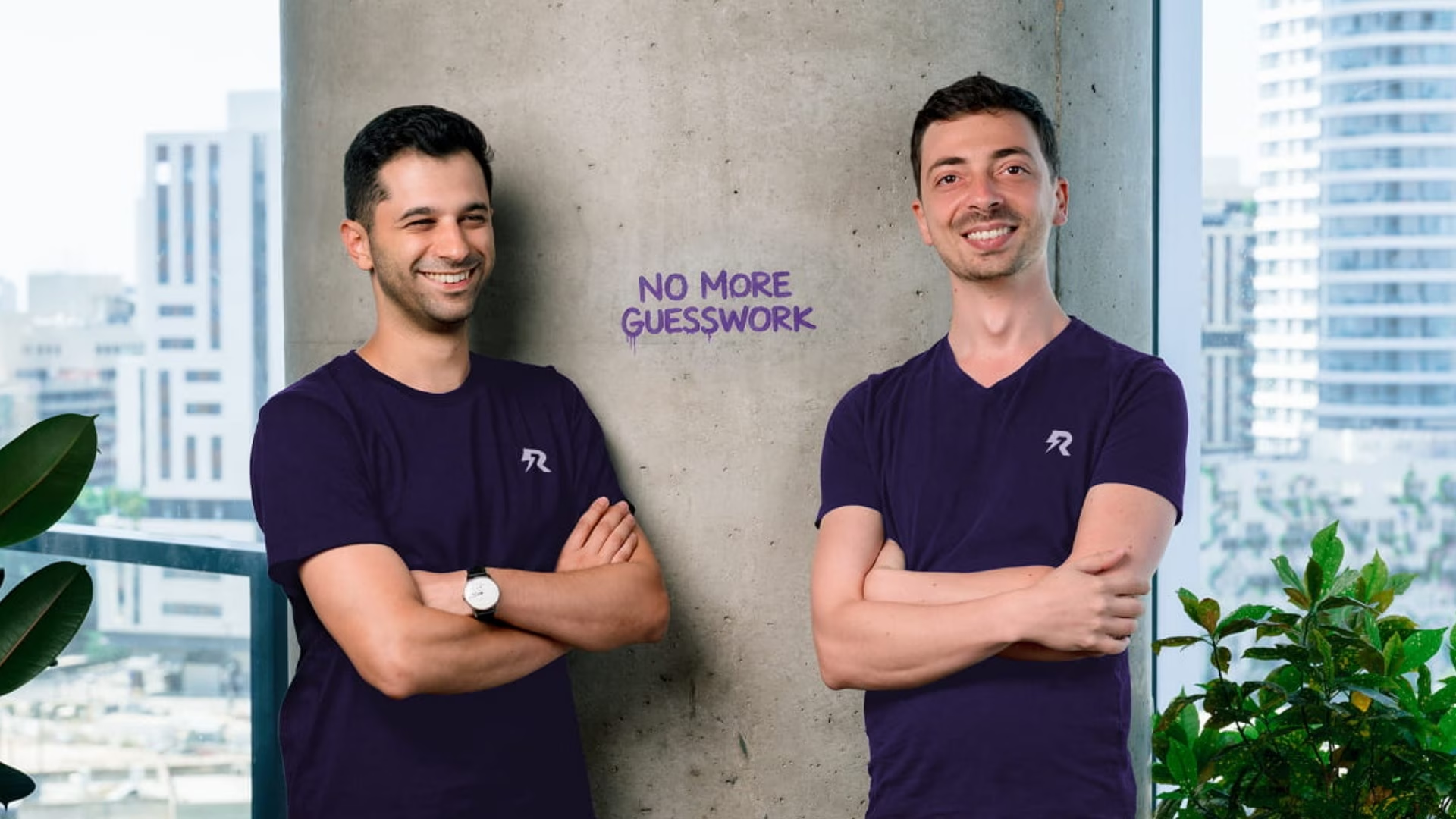
Rein Security co-founders Matan Bar-Efrat (CEO) and Netanel Rubin (CTO). Credit: Rein Security Enterprises are beginning to build AI agents into the way they operate. Connected to databases, customer records, development environments and financial systems, these agents can execute workflows across business applications with limited human intervention. The ambition is to achieve productivity gains across entire processes.
Agents carry work forward without requiring an employee to direct every step. As that model develops, agent reliability and security become questions of operational continuity. Sandboxed environments give AI agents dedicated, isolated workloads in which they can operate continuously until a task is completed. This allows agents to carry out multi-step processes without requiring constant human direction.
It also keeps their execution separate from other enterprise systems. Once agents begin interacting with production environments and business-critical data, however, organizations also need visibility. They need to know what agents access, which tools they invoke and whether their actions remain consistent with the assigned task. As businesses become more dependent on these workflows, they need ways to intervene when something goes wrong without unnecessarily disrupting legitimate activity.
Security Controls Are Still Catching Up The security controls needed to support that dependence are still catching up. The 2026 AI Risk and Readiness Report by Netskope and Cybersecurity Insiders surveyed 1,253 cybersecurity professionals. It found that 91% of organizations cannot reliably prevent risky AI-driven actions before they execute. Thirty-two percent reported having no visibility into agent actions.
Those gaps become more consequential when agents have permission to modify business records. The same applies when they move information or make changes to production systems. Rein Security is building its platform around that operational challenge: understanding what agents are doing and deciding when to intervene. According to the company, its controls can block a harmful action while allowing an agent to continue.
They can also stop the entire agent through a kill switch when necessary. Choosing between those responses requires context about the original task, the systems involved and the sequence of actions. As enterprises become more dependent on agents, that decision becomes essential to protecting both business data and operational continuity. Moving Beyond the Black Box of AI Agents The central premise behind Rein Security is that organizations need visibility into the complete execution chain of their AI systems.
Knowing what a user asked an agent to do is not the same as knowing which database records it accessed. It is also not the same as knowing which APIs it called, or what information it moved along the way. Rein’s platform is designed to automatically discover homegrown AI agents, MCP servers and connected services across enterprise environments. Through a sidecar deployment, the platform observes agent activity as it happens.
It maps relationships between agents, tools and the underlying data they access. That distinction is important as organizations increasingly develop their own agents rather than relying exclusively on packaged AI applications. Internally developed agents can have access to sensitive business systems. But their behavior may not be fully documented or incorporated into existing security monitoring programs.
Rein aims to provide a detailed audit trail covering every agent action. It shows who initiated it, what resources it accessed and how the activity relates to the original request. The objective is to give security teams a more complete picture of agent behavior. That includes activity that traditional monitoring approaches might miss.
Controlling Risk Without Disrupting AI Workflows Visibility is only part of the problem. Security teams also need to decide when to block an individual action and when to stop an agent entirely. A kill switch provides a way to stop an agent. But knowing when to use it requires context: what the agent was asked to do, which resources it is accessing and how its actions relate to the task.
In a LinkedIn post, Rein co-founder and CEO Matan Bar-Efrat described an incident involving a customer’s agent. The agent followed a URL hidden in a PDF and connected to a server that began supplying attacker instructions. According to his account, the agent continued operating with its existing permissions. Meanwhile, other security tools saw what appeared to be ordinary agent activity.
The incident illustrates how an agent’s access can remain authorized even after its behavior has been redirected. Runtime Guardrails Rein approaches this challenge through automated runtime guardrails. According to the company, its platform learns the normal behavior of individual agents and identifies deviations from those patterns. The platform examines the execution chain, including the original request, the tools invoked and the data accessed.
It is designed to help distinguish legitimate activity from actions that could create business exposure. The risks include prompt injection, incorrectly configured tools, user mistakes and AI hallucinations. An agent might receive a legitimate request but interpret it in a way that leads to unauthorized data access. It might also lead to an unintended operation.
Understanding that sequence helps security teams assess the scope of the problem and choose an appropriate intervention. According to Rein, its controls can block a specific harmful action while allowing the agent and its legitimate workflows to continue. This helps preserve production availability. When the risk requires stopping the entire agent, a kill switch provides that broader intervention.
The objective is to give security teams control at the level the situation requires, while minimizing disruption to the operations that depend on the agent. Security Posture and Risk Prioritization The platform also includes an AI security posture component. It identifies exploitable weaknesses across agents, models, tools and dependencies. Its approach combines runtime protection with risk prioritization.
It helps organizations understand which vulnerabilities represent genuine exposure, rather than simply generating another list of potential issues. Rein maps its findings to frameworks including MITRE ATT&CK and MITRE ATLAS. The distinction is relevant for enterprises that want to expand their use of autonomous systems without introducing additional operational friction. Security that requires disabling agents whenever something unusual happens can undermine the productivity gains organizations are trying to achieve.
Data Privacy as an Architectural Decision Another important part of Rein’s positioning is where security data resides. Many security architectures route application activity through external gateways or inspection services. Some organizations handle financial information, healthcare records or other sensitive business data. For them, that can introduce additional questions around data handling, privacy and compliance.
Rein uses a fully in-organization data model. It deploys its platform alongside enterprise agents rather than placing a gateway in their execution path. According to the company, agent data remains within the organization’s environment and its own Rein database. It does not require a third-party copy.
The architecture is particularly relevant to regulated industries. Rein offers dedicated approaches for financial services and healthcare. In those sectors, an agent’s access to customer information, financial transactions or protected health information can carry significant consequences. The platform is also designed to support compliance efforts involving ISO 42001, the EU AI Act, NIST AI RMF and SOC 2.
A Different Approach to Enterprise AI Security As AI agents be













Leave a Reply