
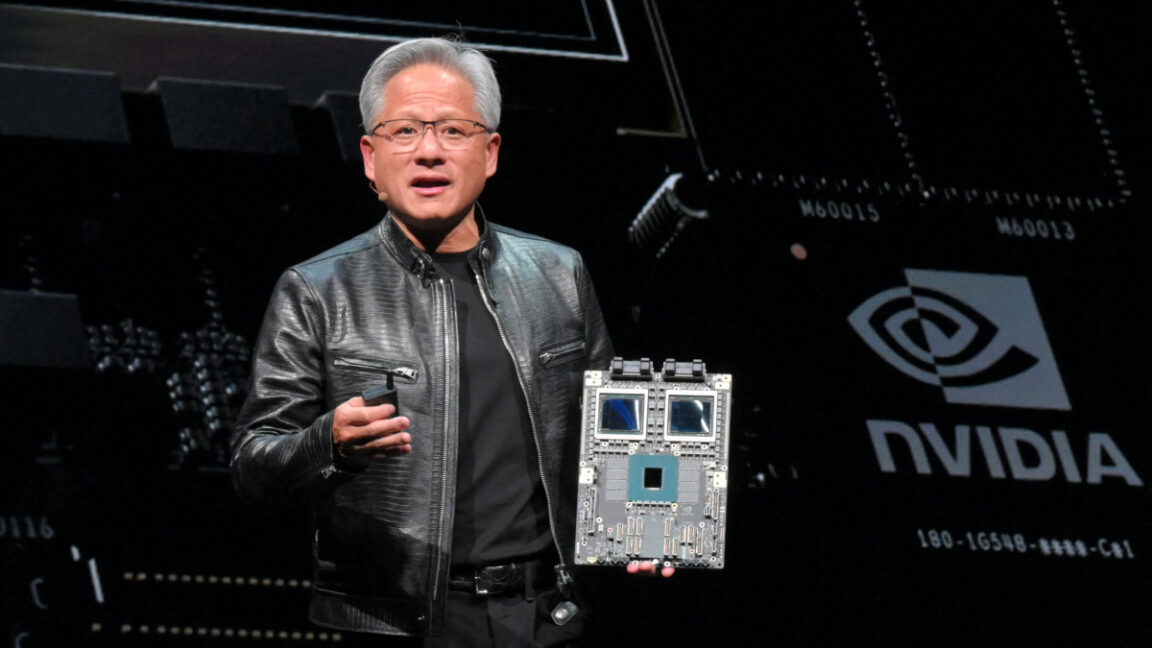
Text settings Story text Size Small Standard Large Width * Standard Wide Links Standard Orange * Subscribers only Learn more Minimize to nav Nvidia’s chief executive Jensen Huang has admitted having an affair two days after the FT reported his alleged romantic relationship with a woman the US intelligence community believes was working as a spy for China. Huang revealed the affair in an internal message to employees on Sunday that was obtained by the FT. “I owe my family and all of you an apology,” Huang said in the message. “I was unfaithful to my wife. My actions hurt her and our children. There is no excuse for what I did.
I am deeply sorry.” In a separate statement, Nvidia said its board would open an independent investigation “in light of recent reporting that founder and CEO Jensen Huang has been the target of a foreign intelligence effort.” Huang said he would fully cooperate. “My responsibility is to serve you and be worthy of your trust,” he said. “I have fallen short of that responsibility. I am fully committed to Nvidia and will work to earn back your confidence.” The FT reported on Friday that the US believed Huang had a romantic relationship with a Chinese woman who was recruited to spy for China’s Ministry of State Security intelligence agency. American officials this year wrote a memo, based on information from US intelligence, which said the Nvidia boss had been romantically involved with Alice Huang, an executive at Megaspeed, a Singapore-based customer of the chipmaker, according to people familiar with the document. The affair is a damaging blow to the Nvidia chief, who in recent years has become the face of the AI boom, one of the technology’s loudest champions, and transformed the Silicon Valley group into the first $5 trillion company.
It also comes at a critical juncture for the wider AI sector, which faces a deepening political backlash in the US and growing investor concern over whether the hundreds of billions of dollars spent on infrastructure will pay off. Nvidia’s Frankfurt-listed shares were down more than 6 percent in early trading on Monday. Huang’s admission of an affair comes after Nvidia previously dismissed suggestions of an improper relationship with Alice Huang, saying the interactions were “nothing unusual or unexpected” when dealing with an Nvidia customer. The American government memo, which said US intelligence believed the Megaspeed executive had been recruited by the MSS, was drafted just before President Donald Trump traveled to Beijing for a summit with Xi Jinping.
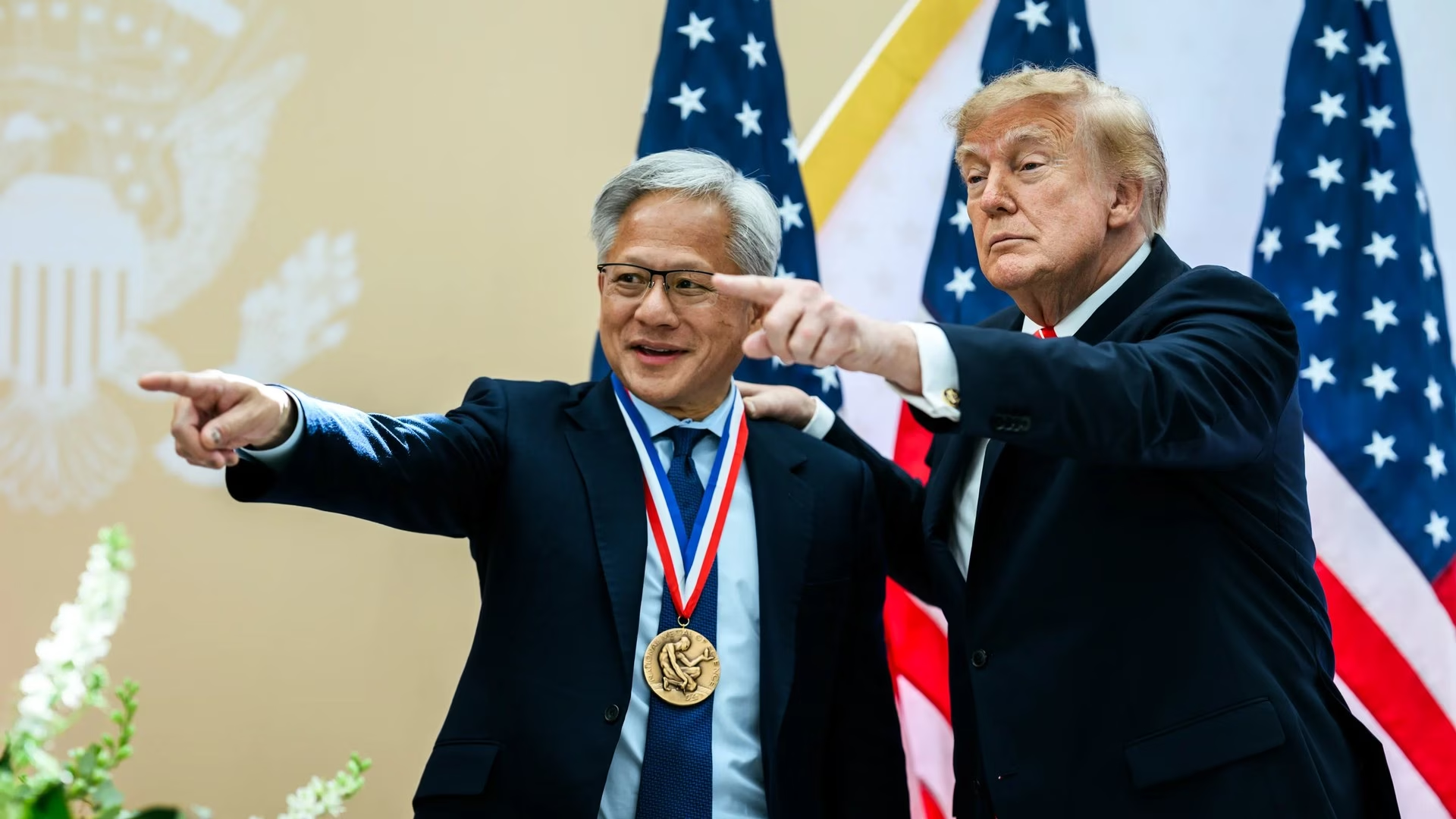
Jensen Huang has developed a close relationship with Trump, which has frustrated US national security officials who believe he is too willing to sell advanced chips to China that could harm American security. Asked about Huang on Sunday, Trump told reporters he had done an “amazing job” for the US. Asked if he regretted not acting on the intelligence about the affair, Trump said: “No, I don’t think so. I think he’s an honorable guy.
I think he probably has an excuse for it. You have to hear it.” “I have not spoken to him about it. I just know he’s a fine person, but you never know what is going on,” Trump added. After broadly staying out of politics, Huang started to build relations with Trump after the president called him out of the blue on his birthday.
He quickly became one of Trump’s favorite executives, accompanying him on state visits, including to China earlier this year and the UK last year. Huang has repeatedly lobbied Trump to adopt a more permissive approach to shipping Nvidia’s AI chips to China, after the company was entirely cut off from the critical market by new export controls in 2025. The resulting deal—with Trump permitting the export of Nvidia’s older-generation H200 chips to China, with the US government taking a cut of sales—had a minimal impact on the Silicon Valley company’s sales, as Beijing pushed back against its technology. But it further angered China hawks in the US administration.
The US government had already been investigating Megaspeed over concerns that it was smuggling Nvidia chips into China. Nvidia on Sunday said a committee of independent directors, helped by external lawyers, would oversee the investigation. “The board prioritizes US national and economic security, which is paramount to the interests of Nvidia and its shareholders,” the company said. “While the board has no reason to believe that either national security or Nvidia secrets were compromised, the board’s inquiry will examine all available information.” Huang, who co-founded Nvidia as a video-game graphics card company in 1993, is one of the longest-serving founder-CEOs in Silicon Valley. More than most technology groups, Nvidia’s success is tethered to that of its CEO. Huang leads a close and loyal core team of about half a dozen executives, acting as its chief salesman on the international stage while directly managing dozens of direct reports who keep the company running.
He has credited this “flat” organizational structure for the speed at which the company operates, helping it to stay ahead of rivals in the AI chip market and increasing its market valuation from roughly $1 trillion in 2023 to $4.5 trillion today. Elon Musk, a close ally of Huang, was among the first to offer support, agreeing with a social media post that he was “one of the greatest entrepreneurs of this generation” and “irreplaceable for America’s AI leadership.” But John Moolenaar, the Republican head of the House China committee who, with other lawmakers, has requested Huang to testify before Congress, said: “It is vital that Jensen Huang address our national security concerns in Congress related to China’s access to sensitive technology and information.” © 2026 The Financial Times Ltd. All rights reserved. Not to be redistributed, copied, or modified in any way.
Financial Times Financial Times 32 Comments












Leave a Reply