
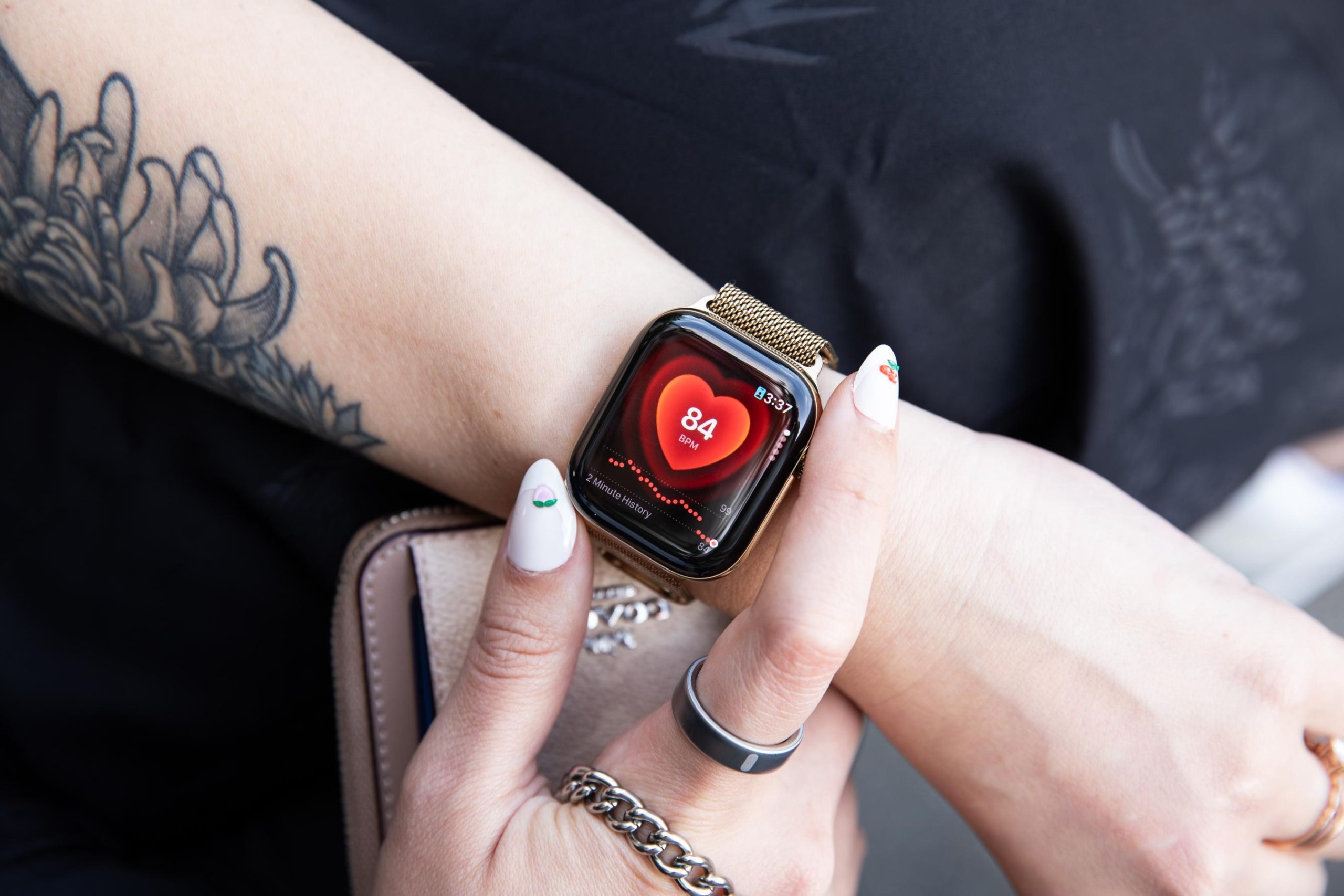
TechGadgetsScienceThe Apple Watch Series 12 is the start of a new wearable eraA surprisingly consequential update for the world’s most popular smartwatch.If you buy something from a Verge link, Vox Media may earn a commission. See our ethics statement.by Victoria SongPhotography by Amelia Holowaty Krales / The VergeSep 17, 2026, 12:00 PM UTCShareGiftIf you buy something from a Verge link, Vox Media may earn a commission. See our ethics statement.This time, heart rate monitoring is truly continuous.Victoria Song is a senior reporter and author of the Optimizer newsletter. She has more than 13 years of experience reporting on wearables, health tech, and more.
Before coming to The Verge, she worked for Gizmodo and PC Magazine.You wouldn’t know that the Apple Watch Series 12 is a big deal just by looking at it. It has the same design, buttons, sizes, and sensor types as generations of Apple Watches before it. But under the hood, the Series 12 builds in major changes that lay the groundwork for big ideas about the future of health and wearables.These ideas — and this year’s updates — can be divided into two parts: catching up to the recent boom in AI health and leading the way in AI wearables that surface helpful information based on your entire day. When it comes to the former, Apple is catching up to the rest of the wearable space, which has eagerly embraced AI as a way to make sense of all your health data.
With the latter, Apple is potentially kicking the door down on what’s been a niche, nascent, and recently problematic market. (Either way you slice it, AI is part of the equation.) Most of the ideas explored with the Series 12 aren’t novel, but they haven’t been implemented by a company with Apple’s scale or reputation.8Verge ScoreApple Watch Series 12$399$399The GoodFaster chargingRedesigned sensor array Ceramic is backThoughtful privacy structure for Audio IntelligenceSiri on the wrist is more usefulThe BadThoughtful privacy may not change how laypeople feelMany of the new features aren’t available at launch$399 at Amazon$399 at Apple$399 at Best BuyHow we rate and review productsAfter a week with the Series 12, I can’t say I have a complete picture. Several of the most interesting health and AI features aren’t launching until later this year and weren’t available for review. But even without them, the revamped internals provide some meaningful upgrades. So for now, this is a look at the health features that’ll be available at launch — and a preview of the wild AI ideas to come.Two key hardware updates separate the Series 12 (and the Ultra 4) from previous Apple Watches.
The first is the new S11 chip, which features a secure exclave for microphone data processing on top of a faster CPU, GPU, and Neural Engine. There’s also a completely redesigned health sensor array. This new array doesn’t necessarily capture new data, but it enables the watch to measure health metrics in a more frequent, accurate, and power-efficient way. The electrodes that enable the EKG feature are larger to ensure better skin contact, the photodiodes have been reconfigured to capture reflected light more efficiently, and larger, less power-hungry optical LEDs are in place to shine light into the skin.This is a significant hardware redesign compared to previous Apple Watches.Together, these hardware upgrades enable a host of new software features, including more frequent heart rate sampling, a new readiness score, and a brave new world of Audio Intelligence, which is what Apple is calling its upcoming suite of AI-powered ambient listening features.Most notably, the redesigned sensors mean the Series 12 and Ultra 4 are now capable of truly continuous heart rate monitoring.
Previously, to preserve charge, Apple Watches only sampled heart rate once every five minutes when you weren’t working out. Now, the Series 12 measures heart rate every five seconds, both at rest and during activities. Other wearable companies have been able to do this for ages, but this is a genuinely helpful update for folks who might need to monitor heart rate due to chronic illnesses.Siri AI is more front and center in watchOS 27.Apple put out a white paper comparing how accurate its continuous heart rate monitoring is to a gold-standard Polar H10 chest strap, as well as competitors like the Pixel Watch 4, Samsung Galaxy Watch 8, Oura Ring 5, and Whoop across several types of workouts and at rest. (It’s an interesting read for wearable nerds!) I’d need roughly eight arms and legs to replicate this study in a week, and alas, I’m not an octopus. However, I did wear an H10 chest strap during two runs (one steady state and one interval run), a walk, and while at rest.
At all times, the Series 12 was within five beats per minute of the H10. There was a slight lag compared to the H10, but in regular use, you’re not going to notice that four-second difference.I’ll continue testing the Series 12 and Ultra 4 against other devices and across activity types, but I’m pretty confident the Apple Watch is now in line with many other popular wearables.The S11’s impact was also noticeable in testing. Siri AI queries are faster on the Series 12 than my Ultra 3. You still might run into latency as Siri “thinks,” but not as much.
If you want more in-depth thoughts about Siri on the wrist, my opinion hasn’t changed from my watchOS 27 preview. In a nutshell, this is the most capable wrist computer Apple’s made, and adding a single pinch gesture to select items makes one-handed control the best it’s ever been.I didn’t notice a negative impact to battery life from continuous heart rate tracking. People will gripe that the Series 12 doesn’t have multi-day battery and sticks to the Series 11’s 24-hour battery estimate. But like last year, I maintain that faster charging is a fine enough solution.
In a 20-minute charging test, I went from 20 to 64 percent battery. Yes, that does mean charging daily in little spurts, but I’ve yet to have the watch die on me. I vehemently believe everyone needs to let their wrists breathe daily, and showering is the perfect time to go watchless. You’ll survive 20 to 30 minutes of no data.All this new hardware paves the way for a much more robust health tracking experience.
That’s probably why, later this fall, we’re getting a new, redesigned Health app. From the demos I’ve seen, it’s going to be a dramatic change. There’ll be AI-powered insights, a longevity tab that includes a Health Age score, VO2 max assessment tests using your phone’s camera, and even the ability to order a blood panel through Quest Diagnostics for $119. The redesigned app is currently available in the latest iOS 27 developer beta, and I’ll give my early impressions on that soon.
However, in this review I’m only going to talk about what’s available to everyone at launch.The big update ready today is Apple’s take on a readiness score. Readiness scores were popularized ages ago by Fitbit, Oura, and Whoop and are meant to be a digestible gauge of how well you’ve recovered from physiological stress. In essence, how “ready” you are to work out again.It takes seven days to populate the readiness score, but the Vitals app now includes extra information about your overnight vitals.Apple assesses “readiness” through a combination of overnight, daytime, and weekly metrics like activity, sleep score, and overnight vitals encompassing resting heart rate, respiratory rate, wrist temperature, and a new metric called recovery heart rate variability (HRV). You might think — wait, my Apple Watch has been able to measure HRV for years.
You’d be correct. This new recovery HRV metric uses a different formula and is enabled by the fact that the watch’s updated sensor array can now take any HRV measurement much more frequently. Whereas “regular” HRV is meant to be a longitudinal look at your overall stress and cardiovascular health, Apple us









Leave a Reply