
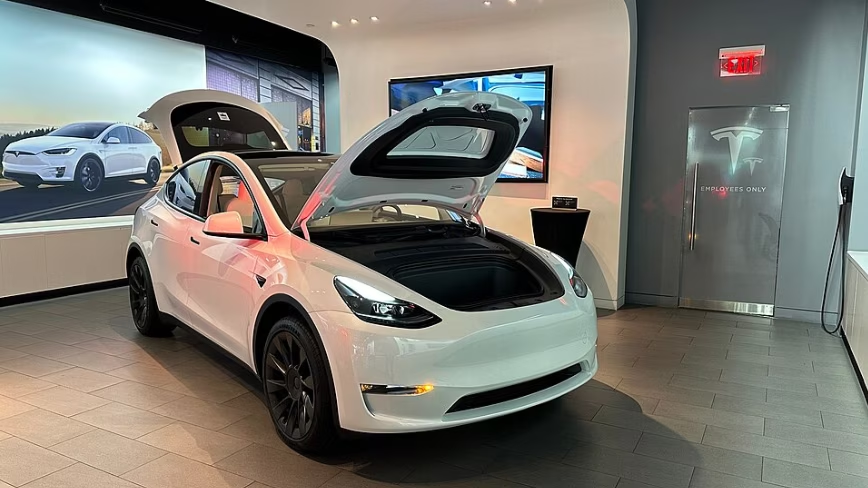
Across the Atlantic, the Dutch vehicle oversight authority RDW granted approval for Tesla’s FSD Supervised system in April pursuant to UN Regulation 171. That regulatory decision emerged after an eighteen-month evaluation spanning 1.6 million kilometres of European road tests and fulfilling more than 400 technical requirements, with local motorists mandated to complete an instructional guide and a quiz before enabling the feature. Relying on EU mutual recognition protocols, five additional nations—Belgium, Denmark, Estonia, Lithuania, and Slovenia—subsequently accepted the certification without conducting independent trials, extending coverage to nearly 42 million residents or roughly 9% of the trading bloc. However, external parties have not viewed the underlying safety assessment because Tesla lobbied the Dutch body to keep its findings confidential starting in late 2024, even requesting in April 2025 that specific documents remain permanently hidden, according to Reuters. A broader European Union vote could take place in October, requiring endorsement from 55% of member states representing 65% of the total population.
Meanwhile, American lawmakers are pressing federal authorities over safety risks associated with distracted drivers operating automated vehicles. Representative Raja Krishnamoorthi, who represents an Illinois district, has set a 30 September deadline for the transportation secretary to detail planned enforcement measures regarding motorists who sleep while utilizing Full Self-Driving technology. The congressional inquiry follows an NBC News report uncovering 43 recorded instances of asleep or otherwise distracted Tesla operators—17 of which surfaced this year—alongside 13 traffic citations issued within California. Highlighting a growing disregard for safety rules, one vehicle owner admitted to sleeping during automated trips, remarking, “As it’s gotten better, the taboo has fallen away.”
Although Tesla’s official documentation maintains that drivers retain ultimate responsibility and mandates internal monitoring of steering inputs, head position, and eye movement, users frequently defeat interior cameras using sunglasses, doll heads, or printed personal photographs. Krishnamoorthi expressed sharp concern over system alerts encouraging fatigued motorists to “stay focused with FSD”, arguing that such notifications raise “a fundamentally different safety question” for regulatory oversight. Concurrently, the National Highway Traffic Safety Administration has maintained an active engineering analysis involving 3.2 million Tesla vehicles since March. This situation reveals a stark global divide, where American officials question driver-monitoring efficacy while European partners have already granted clearance based on undisclosed testing data.






Leave a Reply