
ColumnScienceHealthNew standards for masculinity are stacked against men’s healthChasing unrealistic standards encourages men to turn themselves into DIY science experiments.by Victoria SongSep 10, 2026, 2:00 PM UTCShareGift Photo: Getty ImagesColumnScienceHealthNew standards for masculinity are stacked against men’s healthChasing unrealistic standards encourages men to turn themselves into DIY science experiments.by Victoria SongSep 10, 2026, 2:00 PM UTCShareGiftVictoria Song is a senior reporter and author of the Optimizer newsletter. She has more than 13 years of experience reporting on wearables, health tech, and more. Before coming to The Verge, she worked for Gizmodo and PC Magazine.This is Optimizer, a weekly newsletter sent from Verge senior reviewer Victoria Song that dissects and discusses the latest gizmos and potions that swear they’re going to change your life. Opt in for Optimizer here.Whenever the algorithm serves up a steaming pile of looksmaxxing, I flash back to an old sketch from That Mitchell and Webb Look.
An ordinary woman is told by a commercial narrator that she’s “leaking, hairy, aging, overweight, and everything hurts.” Women, the smug narrator says, for god’s sake, sort yourselves out by buying roughly $300 of products. After a jump cut, an average man is told to shave and get drunk, guitars blaring in the background. The reason? Because he’s already brilliant.Back when that sketch first aired in 2009, it was funny because it felt broadly true.
But in the age of looksmaxxing, where men are increasingly obsessed with testosterone, smashing their bones in pursuit of a sharp jawline, and optimizing their penises, that sketch feels like a glimpse into antiquity.Today, you have men in subreddits and Facebook groups posting before-and-after pics at the gym, arms flexed for maximum veiny bicep effect. In the comments, they ask for each other’s stacks, protocols, and dosing advice, which include everything from T to unapproved gray-market peptides. Some say it’s to score baddies. Others say it’s to maximize their gains at the gym.
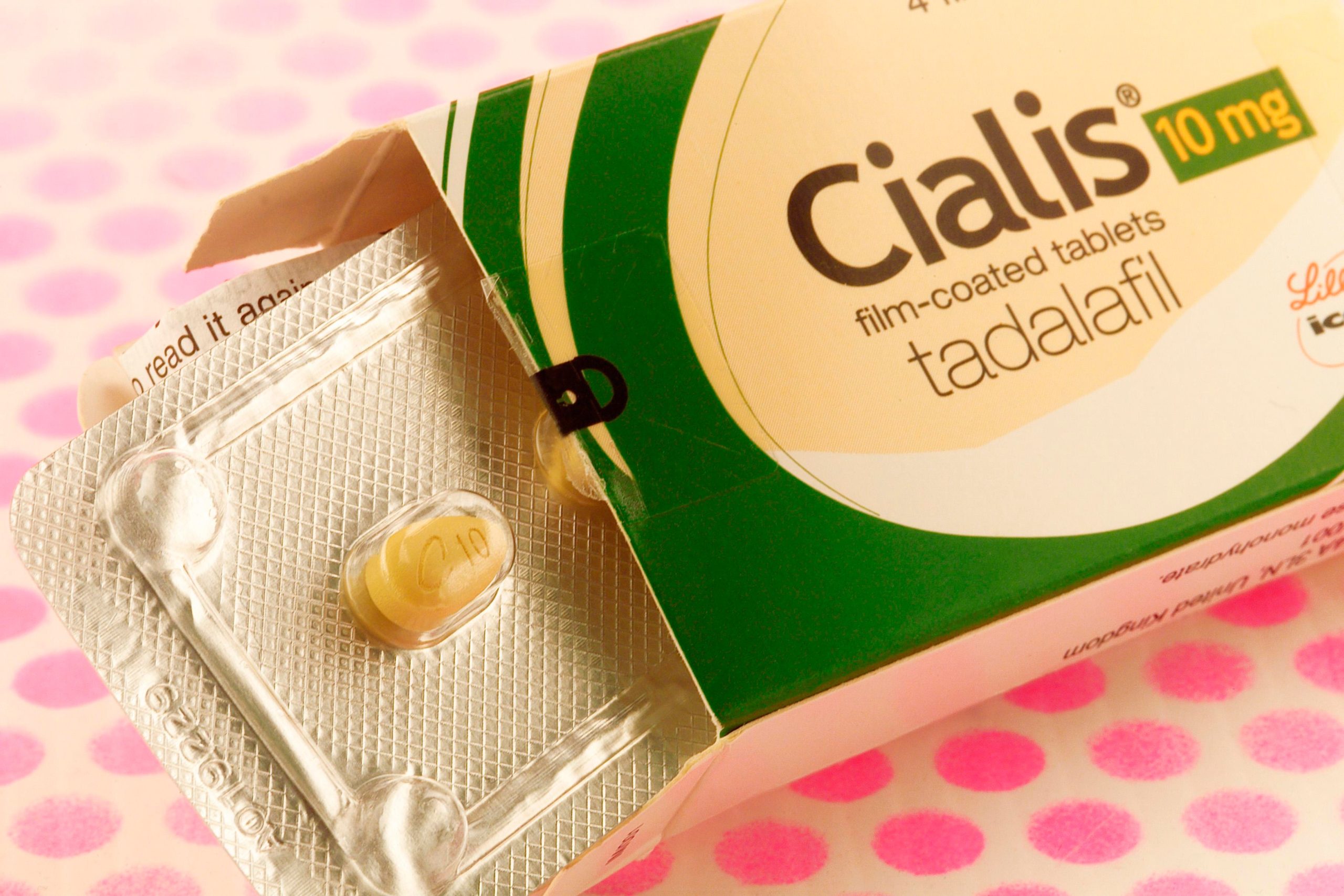
A few seem to think turning themselves into science experiments is how they’ll find the fountain of youth. To me, it feels similar to what women have done for ages: buying snake oil that preys on their insecurities.“I take Cialis, but not for sex,” begins one of biohacker and tech entrepreneur Bryan Johnson’s X posts. “It’s actually a longevity medicine. Cialis (Tadalafil) is great for the same reason it gives you fantastic erections… it improves blood flow.”Tadalafil does, in fact, improve blood flow. The medicine is a vasodilator, meaning it relaxes muscles and widens blood vessels.
It’s most widely known as a treatment for erectile dysfunction. (To be clear, it doesn’t cause erections but helps them last when they occur.) It’s also prescribed to alleviate urinary issues in people with enlarged prostates and high blood pressure in the pulmonary artery. Biohackers like Johnson tout a low dose of tadalafil daily as helping lower cardiovascular risk and cognitive decline. Gym rats often microdose tadalafil as a preworkout supplement because, well, the erections are supposedly better and dilating blood vessels is thought to lead to better “muscle pumps.”Enhanced, the company behind the pro-doping Enhanced Games, sells low-dose tadalafil on its site. Clavicular, the most infamous looksmaxxer, has also stated that he’s taken about 5mg of tadalafil in the past as part of an extensive stack.
This, despite the fact that he’s 20 years old and far from the conventional profile of someone a doctor might prescribe tadalafil to. Popular podcaster Andrew Huberman has also recommended on his show that every man over 40 should be taking a low dose of tadalafil as a preventative measure.Cialis, or tadalafil, works by relaxing muscles and improving blood flow. Photo: Getty ImagesOf course, tadalafil is just like any other medicine. While many may not experience adverse effects at low daily dosages, some will.
And like any medication, there are some people who shouldn’t take it and there are drug interactions to be wary of.It’d be one thing if these influencers were just promoting tadalafil. But most are promoting multiple substances, seemingly all of which you need to be a man. Testosterone, for instance, is massively popular in the same cohort. Ninety-one percent of the athletes at the inaugural Enhanced Games dabbled with testosterone.
Notably, Pete Hegseth recently announced mandatory testosterone screenings for the troops. Some also hype up retatrutide, an unapproved peptide currently undergoing phase three clinical trials, along with TB-500 and BPC-157, two gray-market peptides colloquially known as the Wolverine stack for their supposed wound healing and muscle recovery benefits. And the more things you stack, the greater the risk that a combination has an unintended effect. In the case of lesser-studied experimental treatments, even doctors may not know what those effects are — and might not know for a long time.The stated reasons for taking these risks are myriad.
But whether it’s because it’ll help someone get jacked, live longer, perform better in bed, or just “have more energy,” it boils down to a singular message: It’ll make you more of a man.“This kind of masculinity is a little bit fantastical,” says Dr. Arthur Burnett, the Patrick C. Walsh professor of urology at Johns Hopkins, referring to the current cultural obsession with “maxxing.” Burnett should know. On top of over three decades as a men’s health expert, his research into nitric oxide biochemical mechanisms in erectile tissue helped pave the way for drugs like Viagra.Regarding men taking on all of these additional requirements, he says that “there’s not really a scientific basis.”“I think it’s unfortunate that we’ve pushed the pendulum in a direction that may be harmful, frankly, psychologically at the very least but possibly even physically to the body.
It could be problematic trying to adopt medical terms like ‘prevention’ and ‘men’s health’.”I’m researching a story on peptide use, and I’m looking to interview regular people who are using gray-market peptides. If you’re interested in participating, email me at victoria.song@theverge.com or message me at Signal @vicmsong.14.Burnett is essentially pointing to the divide between how clinicians and the biohacking / looksmaxxing communities view medicine. On the one side, you have medical professionals who largely view drugs as a way to treat deficiencies and bring people back to a “normal” baseline. On the other, you have influencers and enthusiasts (which can include clinicians) who believe that drugs can and ought to be used to “enhance” people beyond their natural limits.
It’s a tension that’s at the heart of so many debates in the wellness wild west.“Preventative care should really be something that those who are at risk or have health adversities can make changes in a way that’s going to correct a problem. What you have here is completely healthy people doing things that can be problematic,” explains Burnett.Testosterone, he says, is a classic example. Otherwise healthy men who over-supplement the hormonal steroid often inadvertently make themselves infertile. For some men, too much testosterone can also trigger a genetic predisposition for hair thinning — which looksmaxxers often address by taking minoxidil.
Add another supplement, drug, or product to combat the side effects of minoxidil — which include dizziness, headaches, and bloating — and that’s how you end up with a stack.What gets lost in all these stacks and protocols is that health isn’t about optimization. For many young men, “optimizing” seems to be less of a goal than a vaguely defined baseline they’re expected to maintain forever. Anything less is a failure, a weakness — unhealthy.A depress














Leave a Reply